


Few, if any, cars are as iconic as the Porsche 911. It’s been on the market since 1964, and over the years, the German sports car manufacturer has perfected its rear-engined setup.
Most of us would be thrilled to own any Porsche 911, but the most ardent enthusiasts are desperate to get their hands on the rarest and most precious models.
We’ve compiled a list of some of the rarest Porsche 911s ever made. Just to be clear, this list isn’t exhaustive, and we know there are many other super-rare models out there.
Porsche 993 Turbo S — 345 Built

In 1997, a year before the 993 took its final bow, Porsche decided to make something truly special and came up with the 993 Turbo S.
It wasn’t the first Turbo S, as the Porsche Exclusive Department had previously stuck the S on the back of the 964 Turbo. However, the 993 was the last air-cooled Porsche, and with a power upgrade and other improvements, it became highly desirable. To make it even more attractive to enthusiasts, only 345 were built, and 183 of those were sold in the States.
Porsche 911 CS — 340 Built

The Porsche 911 Carrera CS, or Club Sport, was available from 1987 to 1989. While it may look like a regular Carrera fitted with a whale-tail spoiler from the 911 Turbo, this is a highly desirable, track-focused special edition.
Porsche put the 911 CS on a strict diet to lose weight, removing anything deemed unnecessary to make it go faster, and installed a blueprinted, high-revving 3.2-liter boxer engine that sent power to the rear wheels via a short-shift, close-ratio gearbox. While making the car lighter positively impacted its handling, the 911 CS was also given suspension modifications and 16 inch wheels wrapped in wider and lower profile rubber to make it a proper track weapon.
Porsche 997 Sport Classic – 250 Built

To mark the beginning of the end of Porsche’s second water-cooled 911, the German manufacturer built 250 units of the stunning 997 Sport Classic from 2009-2010. It blends retro Porsche styling cues from the ’60s and ’70s, such as a double-bubble roof, ducktail spoiler, and Fuchs-style wheels, with modern 997.2 Carrera S performance.
Power comes from a 3.8-liter flat-six, sending 408 horses to the rear wheels via a six-speed shortshift manual gearbox. The widebody Sport Classic also has a lavishly appointed interior with extensive espresso leather, Alcantara, and unique details, like woven seat patterns.
Porsche 964 Turbo S Leichtbau — 86 Built

Leichbau translates to lightweight construction, and that’s exactly what the Porsche 964 Turbo S Leichtbau was. Porsche put it on a diet and it rolled off the showroom floor a whopping 400 lbs lighter than the standard 964 Turbo.
To make things even better, the engine produced over 60 extra horsepower, it had upgraded RS-spec suspension, and there were now intakes in the rear fenders to funnel air to the brakes. Thanks to all these updates, the Porsche 964 Turbo S Leichtbau was the fastest road-going 911 ever in 1992.
Porsche 964 Turbo S Flatnose — 76 Built

Most of us have seen older Flatnose Porsche 911s, but many of them had aftermarket kits, and they were usually fitted on the models before the 964. However, Porsche did actually build 76 ‘Flatnose’ 964 Turbo S cars.
It is, of course, a nod to the original 935-inspired Flachbau 930 Turbos of the 1980s. The styling may not be to everyone’s taste, but good luck trying to pry one from a collector’s hands, as these things fetch an absolute fortune at auctions.
Porsche 996 GT2 Clubsport — 70 Built

The Porsche 996 GT2 Clubsport is a rare, track-focused version of the 996 GT2, featuring a potent twin-turbo engine, rear-wheel drive, and significant weight savings. It’s equipped from the factory with motorsport essentials such as a full roll cage, fire extinguisher, racing harnesses, and fire-resistant seats for extreme performance driving and collecting.
With a 3.6-liter twin-turbocharged flat-six Mezger engine producing around 450-480 horsepower, the 996 GT2 Clubsport combines the brute force of the Turbo’s engine with the lightness and focus of the GT3. Stripped down and ready for the track, with all the power going to the rear wheels and with no electronic driving aids, it’s a legendary, analog “widowmaker” for enthusiasts with serious skills and balls the size of watermelons.
Porsche 964 RS 3.8 — 55 Built

The regular 3.6-liter Porsche 964 is a coveted model these days, but it doesn’t hold a candle to the Porsche 964 RS 3.8. Porsche only built 55 of them, making it a very rare beast that’s only found in exclusive collections these days.
The RS 3.8 used the 964 Turbo’s body, it had 18-inch Speedline rims, RS-derived suspension, and a massive rear wing. Its 3.8-liter engine pumped out 300 horsepower and to slow it down, it used a mix of RS and Turbo 3.6 brakes.
Porsche 930 LE — 50 Built

YouTube / Iconic Auctioneers.
Porsche Exclusive created the 930 LE (Limited Edition) to give the legendary 911 Turbo a proper send-off when production ended. The 964 generation had already been created, but that didn’t stop them from making 50 930 LE cars.
They used standard 930 cars and completely rebuilt them, adding a more aggressive body kit and teasing out more ponies from the turbocharged unit in the rear.
Porsche 911 ST — 24 Built

In the late 1960s and early 1970s, Porsche faced some tough competition in racing, so the German carmaker built a more aggressive version of the 911, called 911 ST (Sport Touring).
Only 24 known Porsche 911 ST examples were made, and as they were built to suit various types of racing, they used different combinations of components, meaning no two Porsche 911 STs are the same. Something that does define them is the wider fiberglass fenders that could accommodate seven-inch front wheels and nine-inch rears.
Porsche 911R — 24 Built

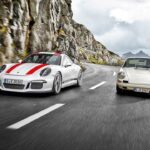
The 1967 Porsche 911R was the brand’s first homologation special and created by Ferdinand Piëch. It used a steel unibody, but all the 911R’s body panels are fiberglass made by Karl Baur. It was a huge exercise in weight saving, and by the time it was done, Porsche had slashed off 20% of the standard 911’s weight. It’s still the lightest 911 ever made.
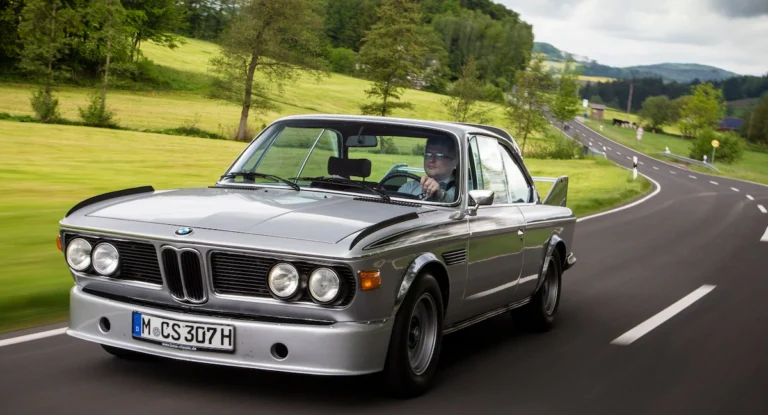
After all that work, FIA refused to accept Porsche’s homologation attempt, so the 911R cars could only compete in non-production categories or as rally cars. Only 20 customer cars were made, along with 4 prototypes.
Porsche 964 Carrera 4 Leichtbau — 22 Built

Porsche only built 22 Carrera 4 Lightweights, and perhaps the biggest surprise is the fact that they were made with surplus parts from the 953 Paris-Dakar project. It had a four-way adjustable differential, short-ratio gearbox, and stripped-out interior.
Thanks to extensive fiberglass use, the Carrera 4 Leichtbau weighed in at just 2,315 lbs, made even more impressive by the fact that it still had AWD.
Porsche 911 SC/RS — 21 Built

In 1984, wanted to take the 911 rallying. More specifically, they wanted to compete in Group B rallies, so they had to develop a car that could stand a chance against the craziest rally cars the world has ever seen. Enter the Porsche 911 SC/RS.
Starting with a road-going 911 SC, Porsche gave the 911 SC/RS wider fenders and a lighter body with an aluminum rear deck lid, doors, and frunk lid. The suspension was upgraded to tackle jumps and hard landings, and the engine was a 255-horsepower 3.0-liter with a 7,500 rpm redline.
Porsche 911 GT1 Strassenversion — 20 Built

Porsche built 20 911 GT1 Strassenversion cars, and as the name implies, it was essentially the street version of the Porsche 911 GT1 that won at Le Mans. It’s kind of designed to resemble the 996 version of the 911, but the two don’t really share many parts, as the rear-end is from a 962 and the front was borrowed from the 993.
The GT1’s engine was a water-cooled, twin-turbocharged 3.2-liter flat-six that produced 540 horsepower. It could sprint to 60 mph in 3.6 seconds and had a top speed of 194 mph.
Porsche 991 Club Coupe — 13 Built

In 2013, Porsche built 13 991 Club Coupes to commemorate the first Porsche club’s 60th anniversary and its 13 founding members. Mechanically, the Club Coupe cars were identical to the regular 991 Carrera S with the 430-horsepower Powerkit.
Club Coupes did have some visual upgrades to separate them from the standard Carrera S. There was a special Brewster Green paint, 20-inch SportTechno wheels, the doors and door sills were marked with “Club Coupe.” Only 12 of the 13 cars were made available to customers, as Porsche kept one car for themselves.
Porsche 993 Speedster — 2 Built

The Porsche 993 Speedster is so rare, even most Porsche enthusiasts don’t know they exist. Porsche Exclusive only built two, and they were inspired by the classic Porsche 356 model.
One of the cars, the green 993 Speedster, was built in 1995 to celebrate Ferdinand Alexander Porsche’s 60th birthday. The other, a silver 993 Speedster, was put together for Porsche enthusiast Jerry Seinfeld in 1998.
Porsche 935 Strassenversion — 1 Built

Porsche built several 935 race cars, but officially, there’s only one road-going 935—not counting the ones made by tuners and aftermarket companies.
Built in 1983 for Mansour Oijeh, the founder of the TAG Group, the Porsche 935 Strassenversion was the first car made by Porsche Sonderwunsch. At the rear, it had a 375-horsepower 3.3-liter turbo engine, and the red paint was made specifically for this 935. Being a one-off, it’s among the most exclusive Porsches ever made. That said, Kremer Racing in Germany did build a road-legal 935 for Walter Wolf, co-owner of the Williams racing team, based on a real 935 Le Mans race car.
Porsche 996 Classic Club Coupe — 1 Built

Porsche Sonderwunsch’s (Special Order Department) only built one 996 Classic Club Coupe specifically for the Porsche Club of America. They started with a used 1998 Carrera that was in a somewhat ratty condition, stripped it down, and rebuilt it better than ever.
At the back, the standard Carrera engine has been swapped with a 996 GT3 unit, the suspension has been upgraded, and at the back there’s now a ducktail rear wing in place of the retractable original spoiler. The roof has a double dome design, the rest of the body kit is GT3-inspired, and it’s all been covered in immaculate Sport Grey Metallic paint with double stripes in Sport Grey Light.
Did you like this article?
Make sure you follow us on Facebook for more builds, guides, and car culture content.

