




Few cars capture the magic of Japan’s Golden Era quite like the Nissan 300ZX. Launched in 1989 alongside the R32 Skyline GT-R, the Z32-chassis ZX was Nissan at its most ambitious — a clean-sheet supercomputer-designed sports car stuffed with technology, twin turbos, multilink suspension, and a silhouette that still turns heads today. And unlike many of its ’90s peers, the 300ZX remains relatively affordable.
But buying one is not as simple as handing over cash and enjoying a slice of JDM greatness. After 30+ years, the Z32 requires careful inspection, a patient buyer, and respect for how complex these cars really are. This guide walks you through everything you need to know before buying a Nissan 300ZX, from models and driving impressions to common failures, rust spots, swaps, red flags, and the traits that separate a good Z from a ticking time bomb.
A Quick Overview: Why the Z32 Nissan 300ZX Still Matters
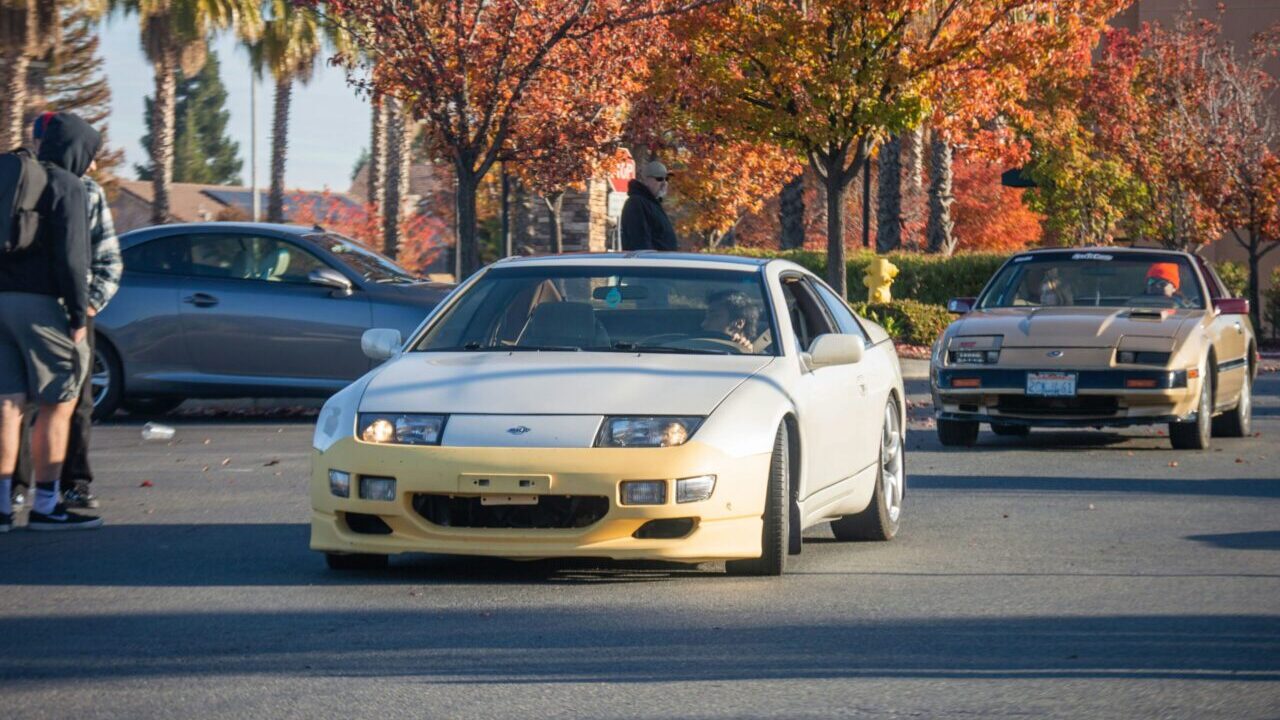
The 300ZX arrived at a crucial moment in the Z-car’s history. After the earlier Z31 had leaned heavily into grand touring and digital excess, Nissan needed something to reclaim performance credibility. The result was the Z32, a true reinvention of the Z car.
Designed using CAD (a rarity at the time), the 300ZX offered:
- A sleek, flush-headlight design
- A wide stance and low hood line
- A new 3.0-liter DOHC V6 (VG30DE / VG30DETT)
- Multilink suspension at all four corners
- Optional Super HICAS four-wheel steering
- A luxuriously sculpted cockpit-style interior
The press loved it. Road & Track declared it “the class of its class.” Motor Trend named it Import Car of the Year. Car and Driver put it on their 10Best list every single year it was sold in North America.
Today, the Z32 is still one of the best-balanced, best-driving Japanese cars of the era… as long as you buy the right one.
Z32 Nissan 300ZX Models and Variants
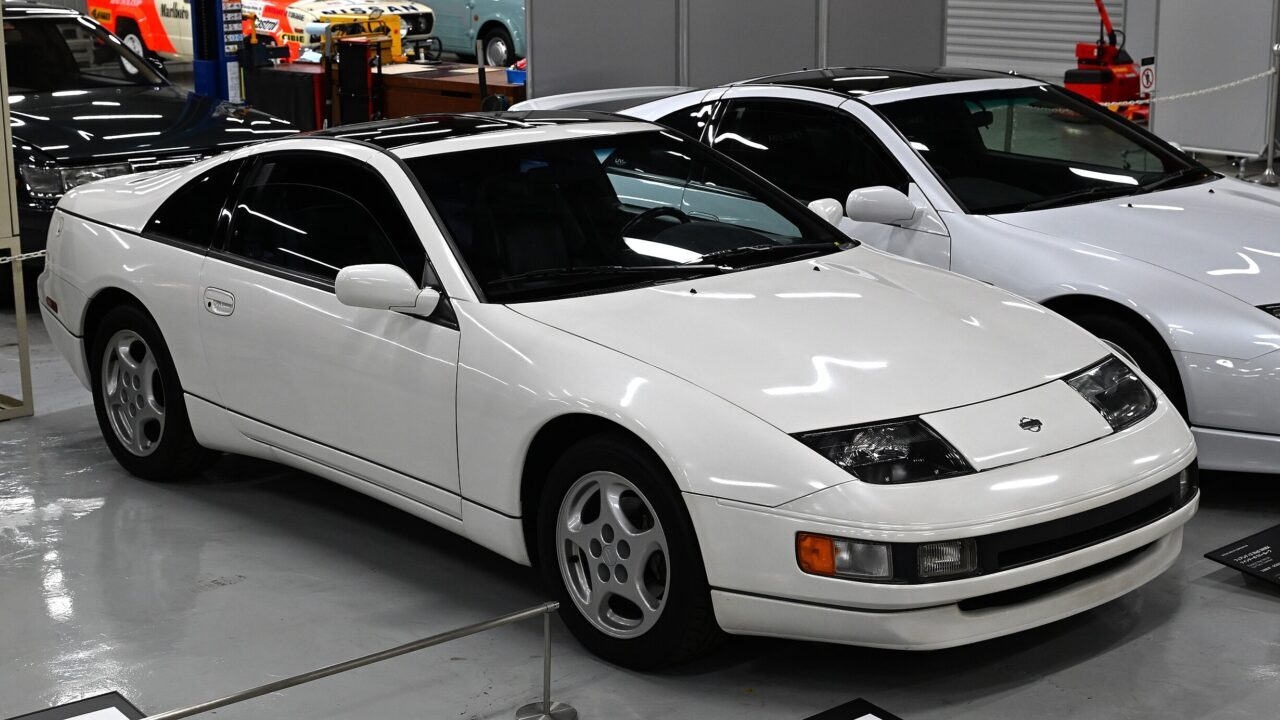
The Z32 came in several configurations across global markets. Choosing the right one depends on what you value: speed, collectability, purity, or long-distance comfort.
Naturally Aspirated (VG30DE) – 222 hp
Years: 1989–2000
Body styles: 2-seater, 2+2
Transmissions: 5-speed manual, 4-speed automatic
The NA is often overshadowed by its twin-turbo sibling, but it’s a much better sports car than many give it credit for. With 222 hp and a 7,200 rpm redline, it’s a smooth, rev-happy engine that delivers rewarding naturally aspirated performance, especially when paired with the 5-speed manual.
Pros:
- Simpler, cooler-running engine bay
- Cheaper to buy and maintain
- Less abused than many Turbo cars
Cons:
- Needs revs to feel fast
- Automatic versions feel sluggish
For drivers who want a reliable, enjoyable Z32 without the running costs and complexity of turbos, the NA is an underrated gem.
Twin Turbo (VG30DETT) – 300 hp
Years: 1989–2000
Body styles: 2-seater, 2+2 (some markets)
Transmissions: 5-speed manual, 4-speed automatic
This is the hero car. With a pair of Garrett T25 turbos, dual intercoolers, beefed-up driveline components, bigger brakes, and optional Super HICAS four-wheel steering, the Turbo transformed the Z into a credible supercar rival.
Pros:
- 0–60 mph in ~5 seconds (very fast for the era)
- Strong mid-range torque (283 lb-ft)
- Fantastic tuning potential (400–500 hp, easily)
Cons:
- More heat, more hoses, more complexity
- Turbos, injectors, and wiring are all prone to age-related failure
- Manual cars are expensive and rising fast
If you want the full ’90s JDM experience, this is the one to own, but you need to buy carefully.
2-Seater vs 2+2
2-seater (SWB):
- Shorter wheelbase
- Sharper handling
- Lighter, rarer, more desirable
2+2 (LWB):
- Slightly softer, more GT-like
- More common in NA and import markets
- Still drives extremely well
Collectors overwhelmingly prefer the 2-seater manual, especially in Twin Turbo form.
T-Top vs Hardtop vs Convertible
- Hardtop: rare and most desirable for driving purity and rigidity
- T-Top: extremely common; check seals and drains carefully
- Convertible: heavy, expensive to restore, and less sought after
Most enthusiasts regard the T-Top as the “default” Z32 experience, but a clean hardtop commands a premium.
Driving Impressions: What a Good Z32 Nissan 300ZX Should Feel Like
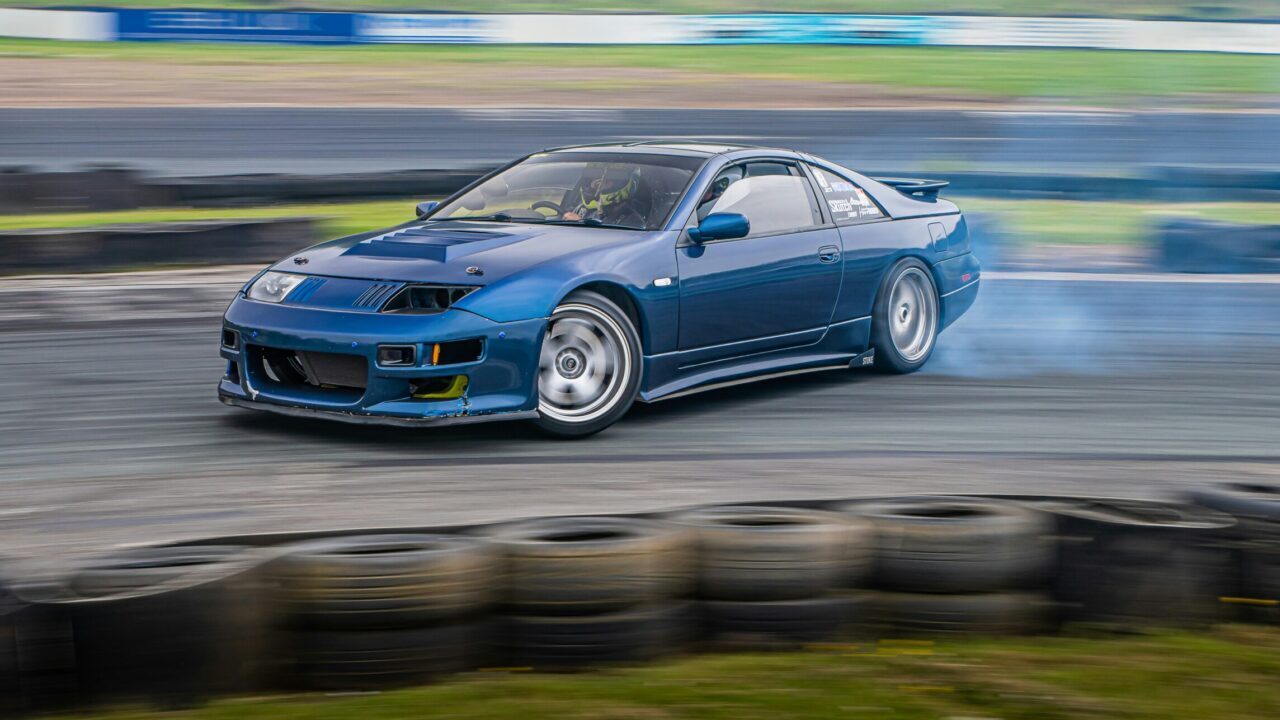
A well-maintained 300ZX is still a fantastic sports car by modern standards. The seating position is low and cockpit-like. The chassis feels planted. The steering, especially with Super HICAS, is sharp and confidence-inspiring. Weighing in at 3,200–3,500 lbs, the Nissan 300ZX is no lightweight, but the car hides its mass well.
Naturally Aspirated Driving Feel
- Smooth and free-revving
- Best experienced with the manual gearbox
- Fast enough to be fun, slow enough to be usable
Twin Turbo Driving Feel
- World-class pace for the era
- Mid-range torque makes it feel eager everywhere
- Super HICAS improves agility, but can feel twitchy when worn
- The car rewards finesse. Push too hard and the rear will step out
- The suspension is firm but not punishing, and compared to modern cars, the ZX feels almost plush on good examples.
Nissan 300ZX Market Values and What You Should Expect to Pay

Prices vary dramatically based on condition, originality, and specification. The Z32 has suffered decades of abuse from tuners, drifters, and inexperienced owners, which means unmodified, well-preserved examples are now the gold standard.
UK / EUR / US General Pricing (as of 2024–2025)
| Condition / Tier | USD Price | GBP Price | EUR Price |
|---|---|---|---|
| Project cars / poor condition | $8,000 – $12,000 | £9,000 – £12,000 | €10,500 – €14,000 |
| Good driver-quality NA (5-speed / auto) | $12,000 – $20,000 | £14,000 – £18,000 | €16,000 – €21,000 |
| Clean NA manuals (well kept / mostly stock) | $18,000 – $26,000 | £15,000 – £22,000 | €20,000 – €26,000 |
| Twin Turbo (good condition, manual preferred) | $25,000 – $40,000 | £25,000 – £35,000 | €30,000 – €42,000 |
| Top-condition Twin Turbos (low miles / stock) | $45,000 – $60,000+ | £40,000 – £50,000+ | €48,000 – €60,000+ |
| Collector-grade / rare spec (hardtop, JDM 2-seater, ultra-low miles) | $75,000 – $120,000+ | £55,000 – £65,000+ | €70,000 – €115,000+ |
Prices based on a mix of current listings and recent sales data from sources such as Classic.com, AutoTrader UK, TheClassicValuer, Cars.com, AutoScout24, Bring a Trailer, and PistonHeads. Actual values will vary by condition, spec, mileage, originality, and market.
Two-seat, manual, Turbo, hardtop cars are worth the most.
Heavily modified or swapped cars are worth the least — and are the biggest money pits.
What to Look For: Known 300ZX Problems & Critical Inspection Points
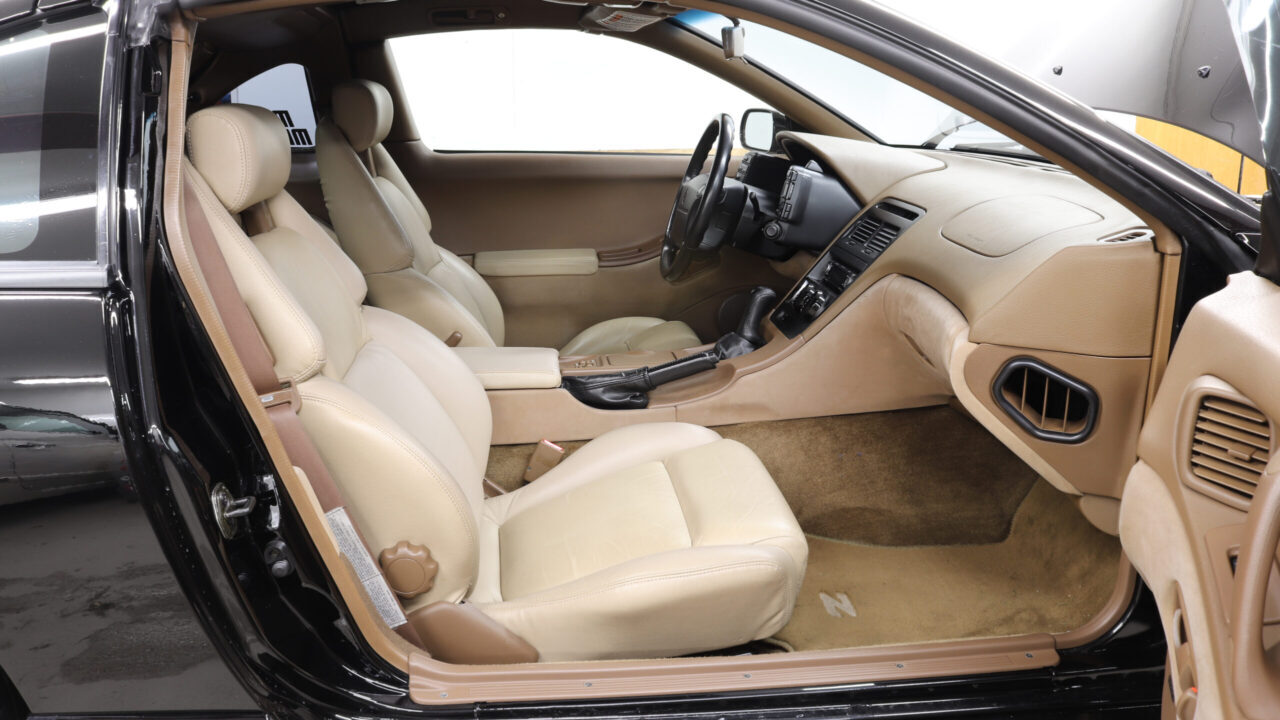
This is where the Z32 separates careful buyers from future victims. The 300ZX is not fragile, but it is complex. A well-loved example can go 200–300k miles. A neglected one can bankrupt you in six months.
Below are the main problem areas — and what they mean for your purchase.
1. The Engine: VG30DE and VG30DETT
Timing Belt (DO NOT Ignore This)
The VG engine is an interference engine.
If the timing belt snaps, the engine destroys itself.
Schedule:
- Every 60,000 miles or 48 months
- Water pump, tensioners, idlers, thermostat should be done at the same time
If there’s no documentation, plan on doing it immediately.
Heat, Wiring, and Vacuum Issues
The Z32 engine bay runs hot.
This kills:
- Wiring harness insulation
- Vacuum lines
- Coil packs
- Injector connectors
- Alternators
Bad wiring causes hard starts, misfires, random dying, and rough idle.
Injectors
Early-style injectors are prone to failure.
A ticking noise often indicates injector or coil-pack issues.
Turbos (TT Only)
Look for:
- Smoke on boost = blown turbo seals
- No boost = stuck wastegate or seized turbo
- Limp mode = bad detonation sensor
Cooling System
These engines hate heat.
Check:
- Radiator (prefer OEM clutch fan, avoid cheap electric fans)
- Overflow tank
- Cracked plastic radiator necks
- Coolant leaks around the water pump
- Condition of all hoses
2. Transmission & Driveline
5-Speed Manual
Very strong. Problems are rare.
Check for:
- Smooth shifting
- No grinding into 2nd or 3rd
- Quiet throw-out bearing
4-Speed Automatic
The auto is not recommended for Turbo cars.
Prone to:
- Overheating
- Slow shifting
- Slipping
- Premature wear
Only consider one if you love the car and the auto has been serviced.
Differential & Driveshaft
Listen for:
- Clunking on throttle transitions
- Ratcheting noises at low speeds
- Vibration at highway speeds
Often caused by:
- Bad diff bushings
- Worn carrier bearings
- Tired CV joints
3. Suspension & Steering
Tension Rod Bushings (Common)
Stock liquid-filled bushings leak with age.
Symptoms:
- Steering wobble under braking
- Wandering at high speeds
Replace with polyurethane or solid versions.
Super HICAS (TT & Some NA)
Brilliant when new, but terrifying when worn.
A worn HICAS system causes unpredictable rear-steer behavior.
Many owners delete it, and that’s a perfectly acceptable solution on street cars.
4. Brakes
- Early brake master cylinders (pre-1991) are known to leak
- Turbo cars have thicker discs (30–32 mm) and better feel
- Pulsation under braking means warped rotors or tension rod issues
5. Bodywork & Rust: Where to Look
The Z32 is fairly rust-resistant, but age and bad owners catch up.
Critical rust areas
- Rocker panels / sills (especially on T-Top cars)
- Rear wheel arches
- Battery tray
- Trunk floor under the carpet
- Pinch welds
- Frame rails
- Hatch seal areas
If sills are soft, walk away immediately and don’t look back! Repairing them is expensive due to their triple-layer construction.
Accident Indicators
Z32s are notorious for poor panel alignment after crashes.
Watch for:
- Sagging nose panel
- Uneven gaps between the bumper and fenders
- Headlights that “dip” at one corner
- Hood that looks slightly ajar even when closed (bent core support)
- Painted-over accent stripe
6. Interior & Electronics
The biggest issue? Everything is electric.
Check:
- Every switch
- Every gauge
- Climate control
- Power windows and mirrors
- Instrument lights
- Stereo (often dead)
- Seat motors
- T-Top locks and seals
T-Top leakage can destroy seats, carpets, and electronic modules.
Parts are becoming hard to source, especially:
- Plastic interior trim
- Cloth seat upholstery
- Digital A/C units
- Switchgear
A complete interior is a valuable asset.
7. Swaps, Rebuilds, and Mods – Major Buyer Beware
TT Swaps
Avoid at all costs, as most are poorly executed.
Issues include:
- NA fuel pump
- Wrong ECU
- Incorrect injectors
- JDM auto TT engines installed in manual cars
- Missing intercoolers
- Incorrect wiring
- Boost leaks everywhere
“Freshly Rebuilt Engines”
Can be a red flag.
Look for:
- Receipts
- Machine shop documentation
- Before/after compression results
A rebuilt engine with 5,000–10,000 miles is safer than one with zero.
Heavy Modifications
Unless you know the builder, avoid:
- Giant turbos
- Unknown ECUs
- Hardwired boost controllers
- Cheap coilovers
- Fully shaved engine bays
- Show-car wiring looms
Stock or lightly modified is always worth more. Check out Tor Håkon’s Nissan 300ZX with 400+ whp to see what a good example of a modified car looks like. If you want to modify your car, we also have a 300ZX tuning guide.
How to Inspect a 300ZX Properly
Always inspect cold.
A warm engine can hide:
- Smoking turbos
- Low compression
- Noisy lifters
- Vacuum leaks
Compression test is mandatory
VG engines rarely fail, but low compression means:
- Incorrect rebuild
- Poor maintenance
- Ring wear
- Valve seal issues
Boost gauge readings tell a story
- Strong vacuum (-14) at idle = healthy
- Low vacuum = leaks or low compression
- Boost only reaching halfway = safety mode
- No boost = wastegate/turbo failure
- Too much boost = risky tune
Which 300ZX Should You Buy?
For Collectability
- Twin Turbo
- 5-speed manual
- 2-seater
- Hardtop
- Stock or lightly modified
- Full service history
For Best Value
- NA 5-speed
- 2-seater or 2+2
- Unmodified
For Driving Enjoyment
- Manual Turbo
- Super HICAS intact and functioning
- Good suspension bushings
For Project Builders
- NA chassis in good condition
- Avoid neglected TTs
- Avoid swaps unless proven professional
Conclusion: Patience Pays Off
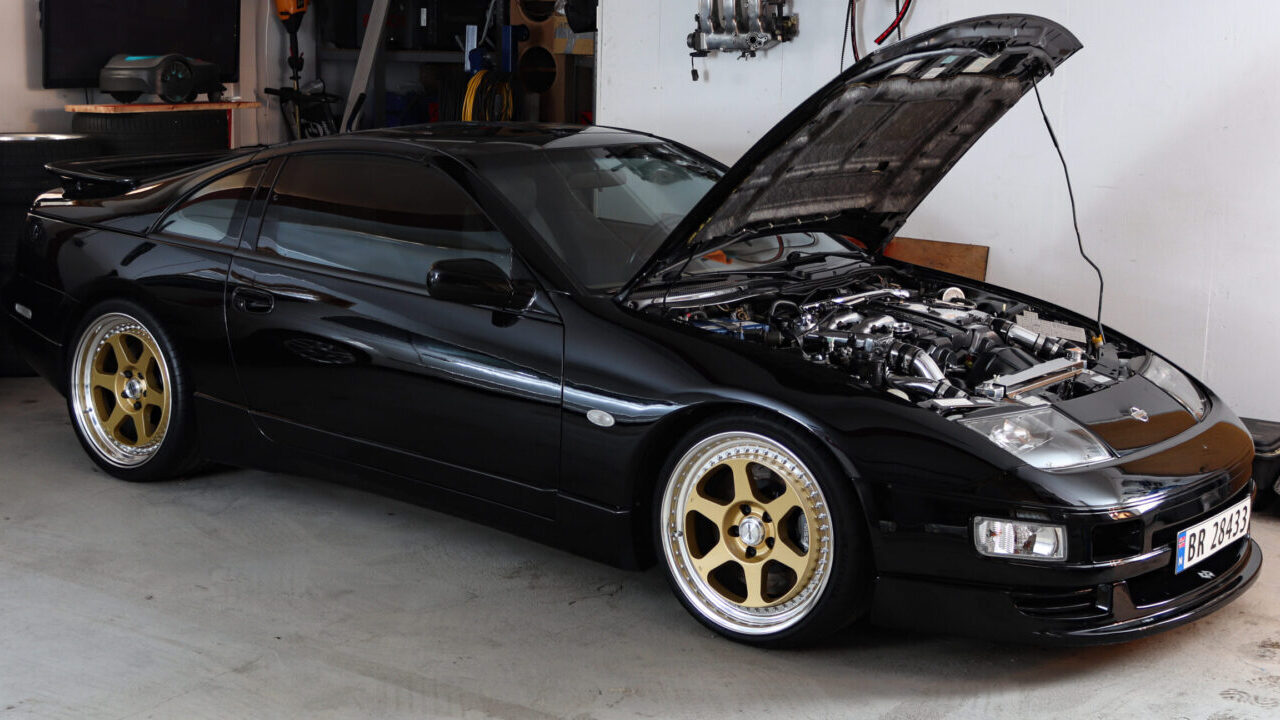
The Nissan 300ZX Z32 is one of the finest Japanese cars ever made. It’s beautifully engineered, stunning to look at, and rewarding to drive, but it’s important to remember that this is not a Corolla. The 300ZX demands respect, maintenance, and careful ownership.
Buy a good one, and it will deliver decades of joy, but if you get a bad one, it can potentially bring years of misery, and you’ll go bald from pulling out your hair.
Take your time.
Inspect thoroughly.
Choose carefully.
Do that, and you’ll own one of the true icons of the JDM golden age, a car that still feels special every time you slide into the low, wraparound cockpit, twist the key, and hear that glorious VG V6 come to life.
Did you like this article?
Make sure you follow us on Facebook for more builds, guides, and car culture content.

