

Japan has built some of the most iconic performance machines in motorsport history. From the screaming rotaries at Le Mans to GT-Rs tearing up Group A touring car grids and immaculate, wide-bodied JGTC GT500 monsters, Japanese race cars have helped shape video games, tuning culture, and what we imagine when we hear the letters “JDM.”
This list celebrates some of the Japanese race cars that truly earned legendary status — machines that became posters, game covers, model kits, and lifelong obsessions. These are the JDM cars that defined generations of enthusiasts. Every car on this list meets at least one of these criteria — most hit all of them: Motorsport importance (titles, innovation, dominance), cultural impact (Gran Turismo, Initial D, tuning scene, global fandom), engineering excellence (aero breakthroughs, powertrains, reliability), design/iconography (liveries that became legendary), track cars only – drift and rally cars deserve their own articles.
Let’s check out some of the machines that changed the direction of Japanese motorsport.
Nissan Primera BTCC (Super Touring Era)
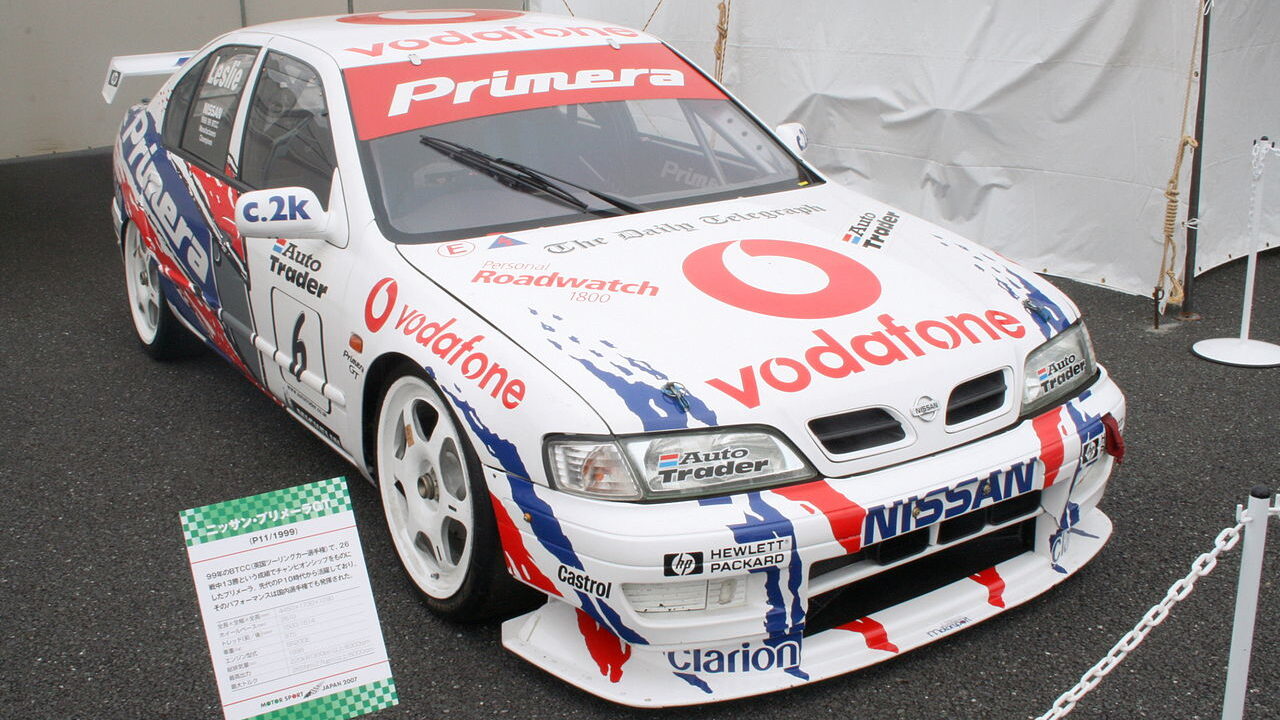
Before “BTCC” became shorthand for chaos and contact, it was home to seriously fast engineering, and the Nissan Primera was one of the absolute benchmarks of the 1990s Super Touring era. With front-wheel-drive, a screaming naturally aspirated SR20 engine, and razor-edged aerodynamics disguised under street-car bodywork, this thing fought toe-to-toe with BMW, Audi, Volvo, and Honda.
In 1999, Laurent Aïello drove the Primera to both the Drivers’ and Manufacturers’ Championships, giving Nissan one of its biggest touring-car triumphs. The sound, the stance, the handling, everything about it feels engineered to perfection. Because the BTCC era was so influential, the Primera became a cult hero in a way few family sedans ever have.
Honda Accord BTCC (Super Touring Era)
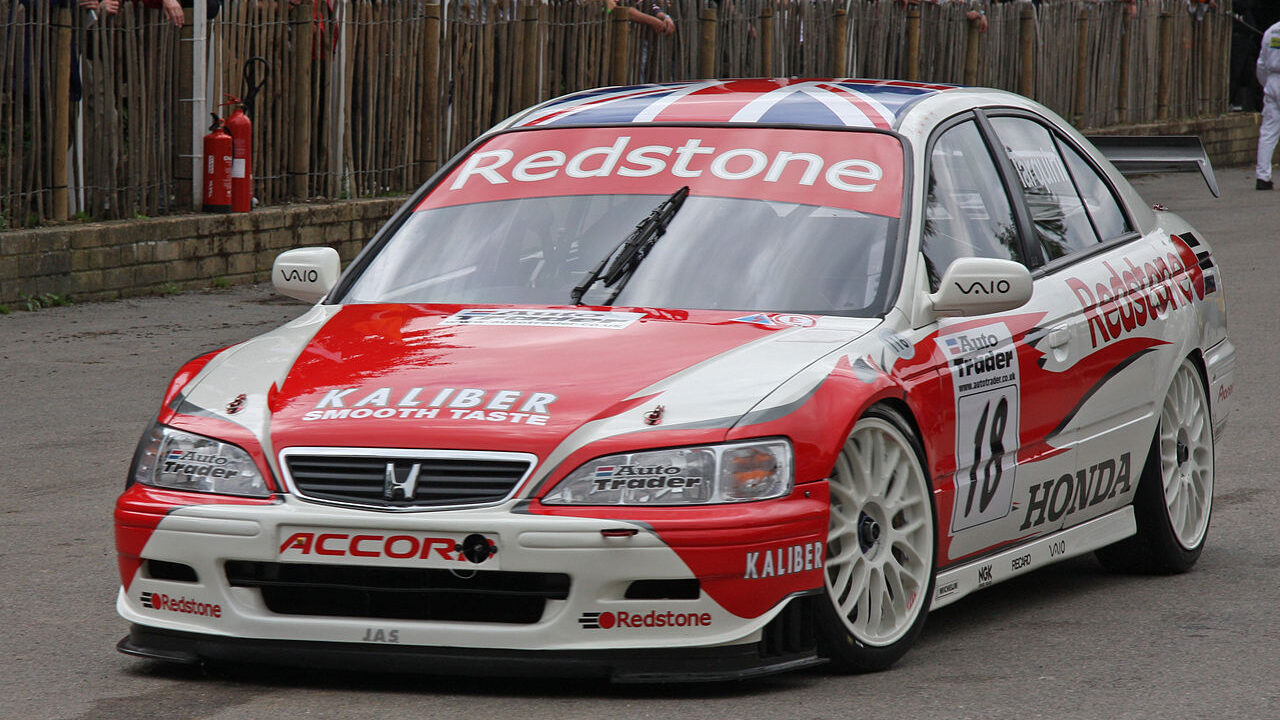
Honda’s BTCC history is stacked with great cars, but the Super Touring Accord is the clear standout. It was beautifully balanced, famously reliable, and brutally quick in the hands of drivers like Gabriele Tarquini and James Thompson. The battles between the Accord, Primera, and Volvo S40 during the late ’90s are the stuff of motorsport legend.
The Accord’s success in BTCC helped cement Honda’s reputation for building cars that punched far above their weight in touring-car racing. For many enthusiasts, the Championship White livery on an Accord making beautiful FWD magic is an unforgettable memory.
Raybrig Honda NSX (JGTC GT500)
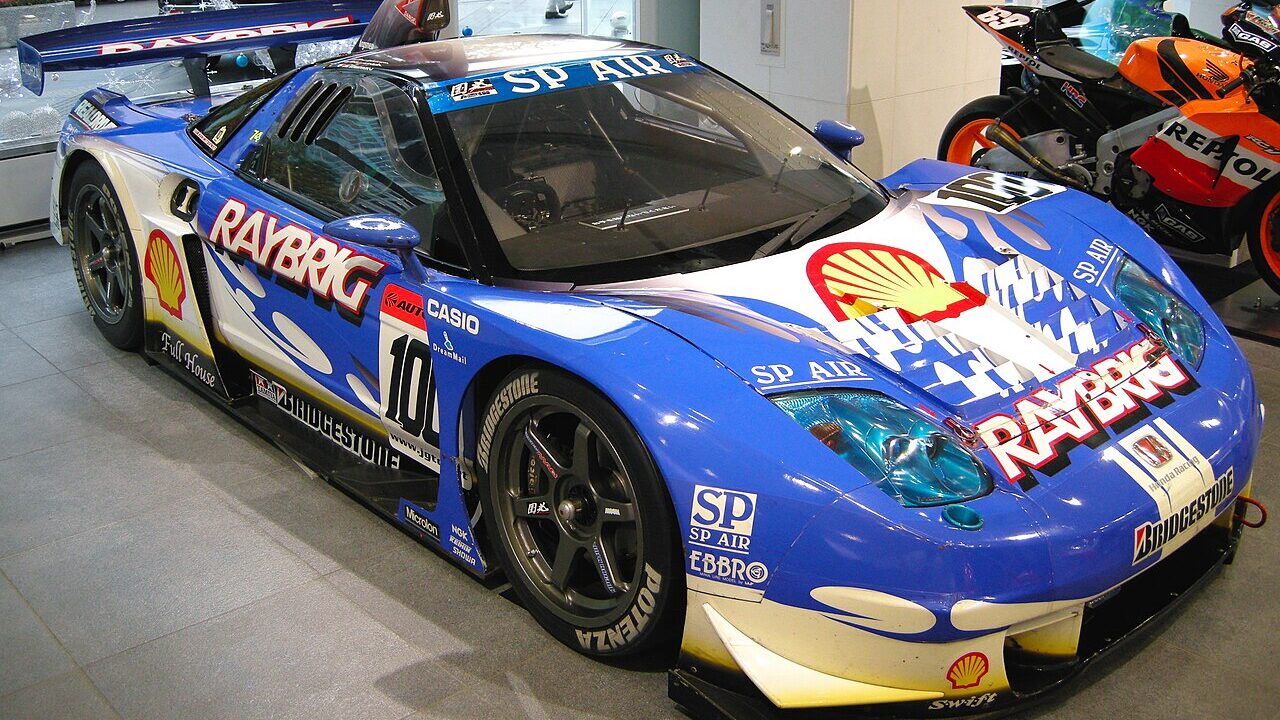
Look at it. Just look at it! Few race cars in history have a presence like the Raybrig NSX. Its rich midnight-blue-and-Raybrig-light-blue livery, massive GT500 aero, widebody stance, and mid-engine layout made it one of the most instantly recognizable JGTC machines ever.
The NSX GT500 program was incredibly successful, with Honda claiming multiple championships over the years. The Raybrig entry, in particular, feels like a perfect embodiment of early-2000s JGTC: wild aero, factory-backed horsepower, and relentless development. The NSX was the GT500 car that tuner crowds worshipped, sim racers adored, and diehard fans still miss today.
Nissan 350Z GT500 (JGTC / Super GT)
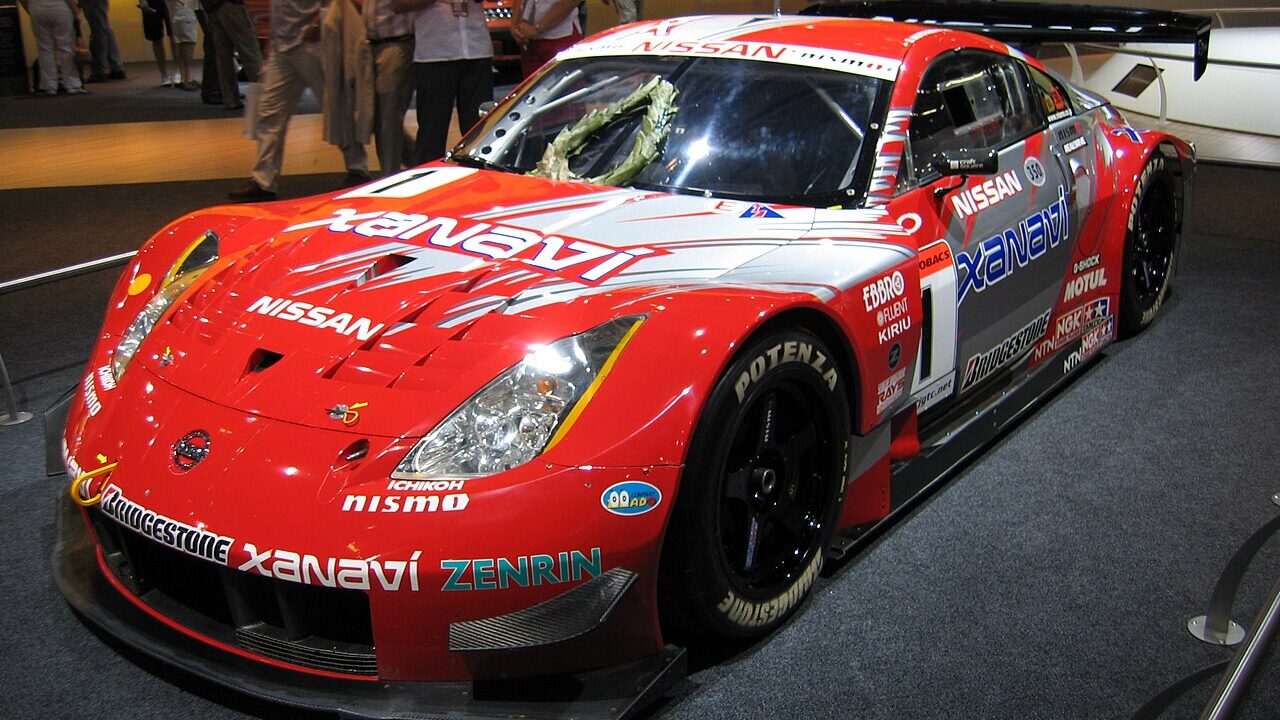
The Z33 GT500 car is one of the most underrated Japanese race cars ever built. It bridged the gap between the Skyline R34 GT500 era and the later GT-R dominance, carrying the Nissan banner with a front-engine, rear-wheel-drive platform that produced some of the series’ most dramatic battles.
Under the hood, the standard VQ six-cylinder unit was replaced by a full-blown race-spec V8 shared with Nissan’s other GT500 machines. Wrapped in a muscular body with huge fenders and unmistakable JGTC aero, the Z33 GT500 is a time capsule of early-2000s Japanese motorsport, and it’s as beautiful as it was competitive.
Honda RA272 (1965 Formula 1)
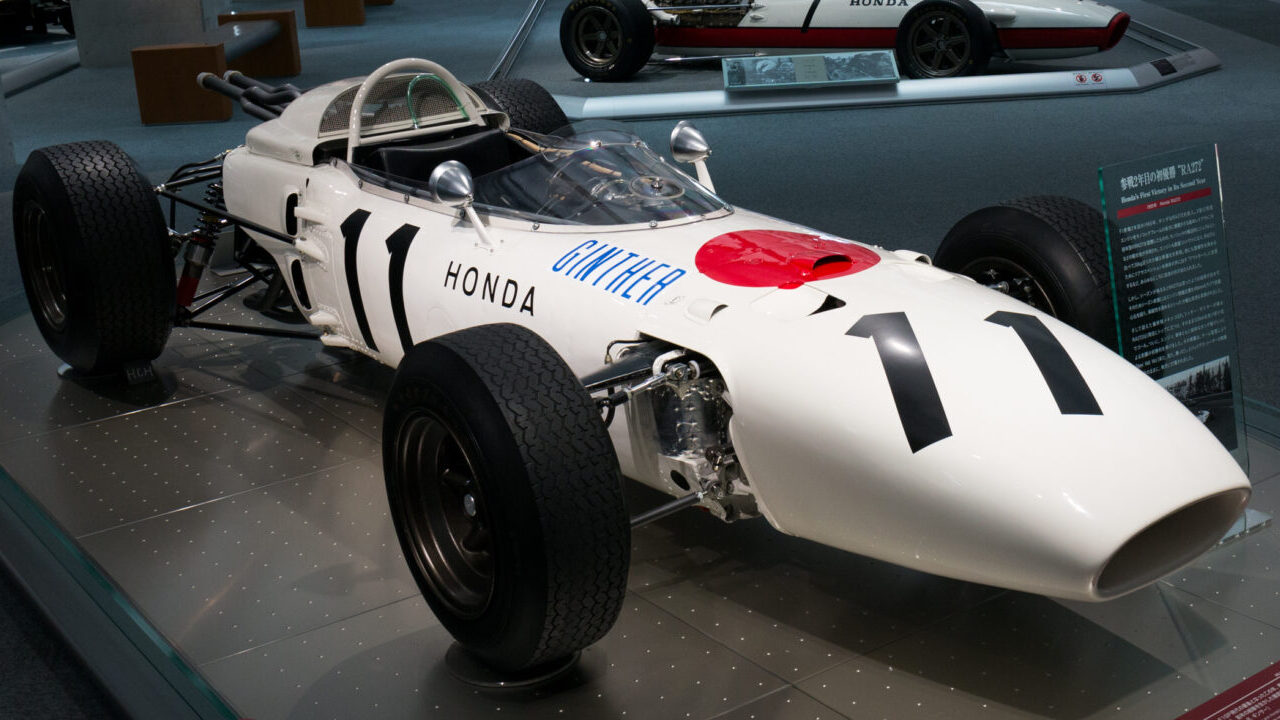
Before JDM culture, GT-Rs, rotaries, or turbocharged homologation heroes existed, heck, before Japan was even considered competitive in global motorsport, there was the Honda RA272, Japan’s first Formula 1 race winner.
In 1965, Richie Ginther drove it to victory at the Mexican Grand Prix. The RA272’s white body with a red Japanese rising sun went on to inspire decades of Honda race liveries, and its air-cooled V12 engine delivered one of the most unforgettable sounds in racing history. This car was as much a symbolic moment of Japan joining the global performance world on equal footing as it was a motorsport achievement.
Mazda RX-7 IMSA GTO

Mazda’s IMSA GTO program was rotary madness at full volume. The RX-7 GTO combined outrageous fender flares, massive slicks, a violently boosted 13B or 20B rotary engine, and one of the most aggressive looks in Mazda race history.
These cars were brutally fast and unbelievably loud. They dominated their class through the late ’80s and early ’90s, and today they represent the peak of rotary-powered American road racing. If your heart doesn’t skip a beat when you see a widebody RX-7 race car with giant aero and period-correct decals, you might need to see a doctor.
Honda NSX-GT (JGTC GT500)
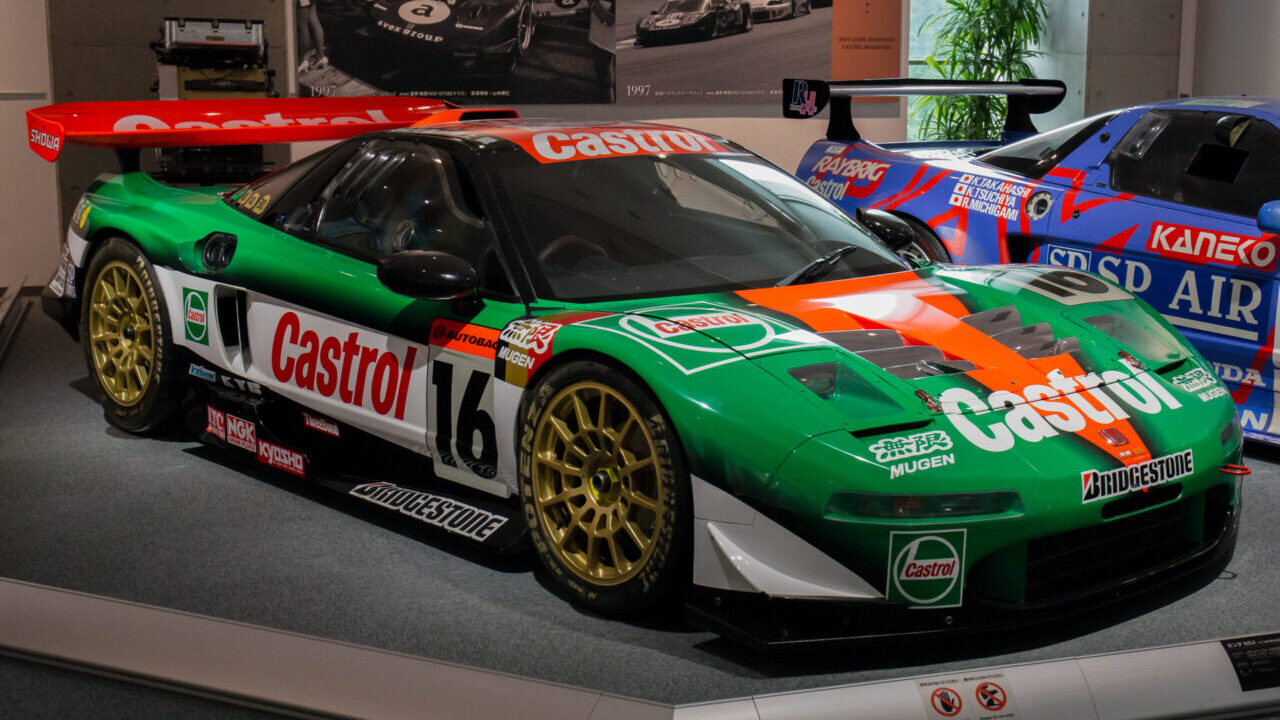
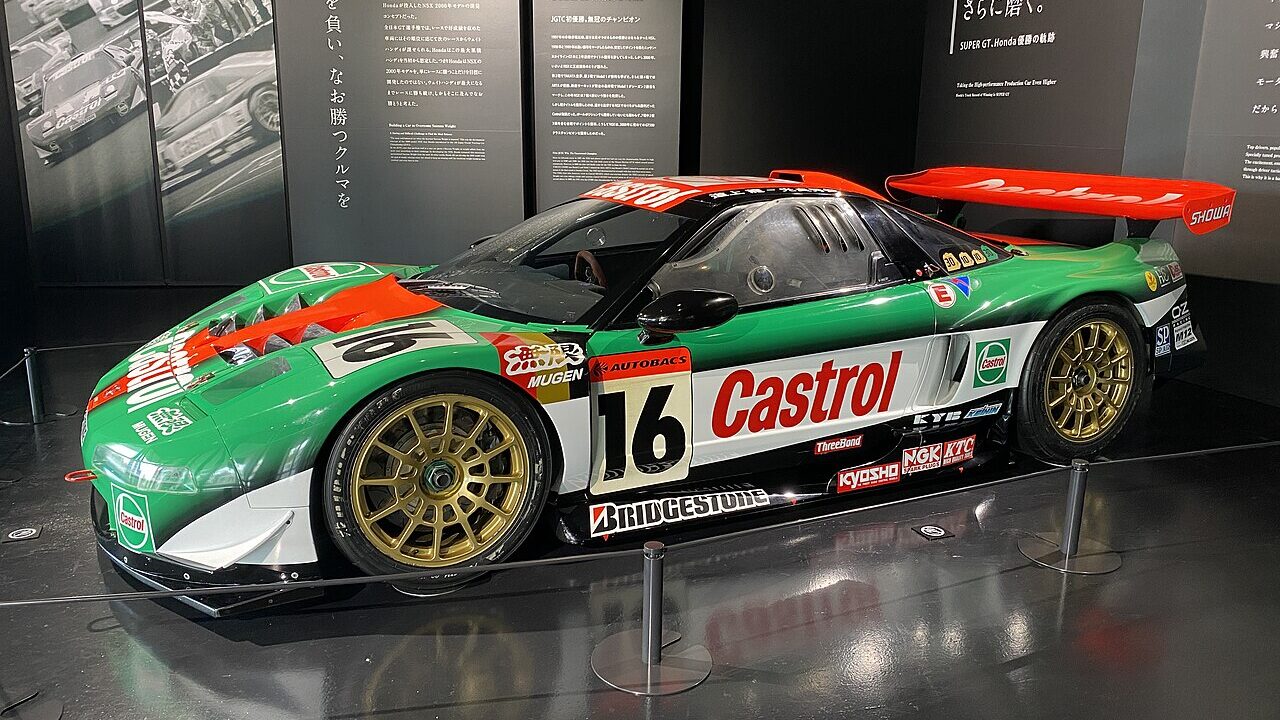
Before the Raybrig NSX became the icon, the earlier NSX-GT cars were already rewriting the rules of JGTC. Built on Honda’s already brilliant mid-engine supercar platform, the GT500 NSX was known for razor-sharp turn-in, incredible balance, and a soundtrack that could stop time.
These cars proved that Honda could go wheel-to-wheel with Nismo, TOM’S, and Team Kunimitsu at the top tier of Japanese GT racing. The NSX-GT was competitive and feared by opponents.
Toyota TS020 GT-One (Le Mans)
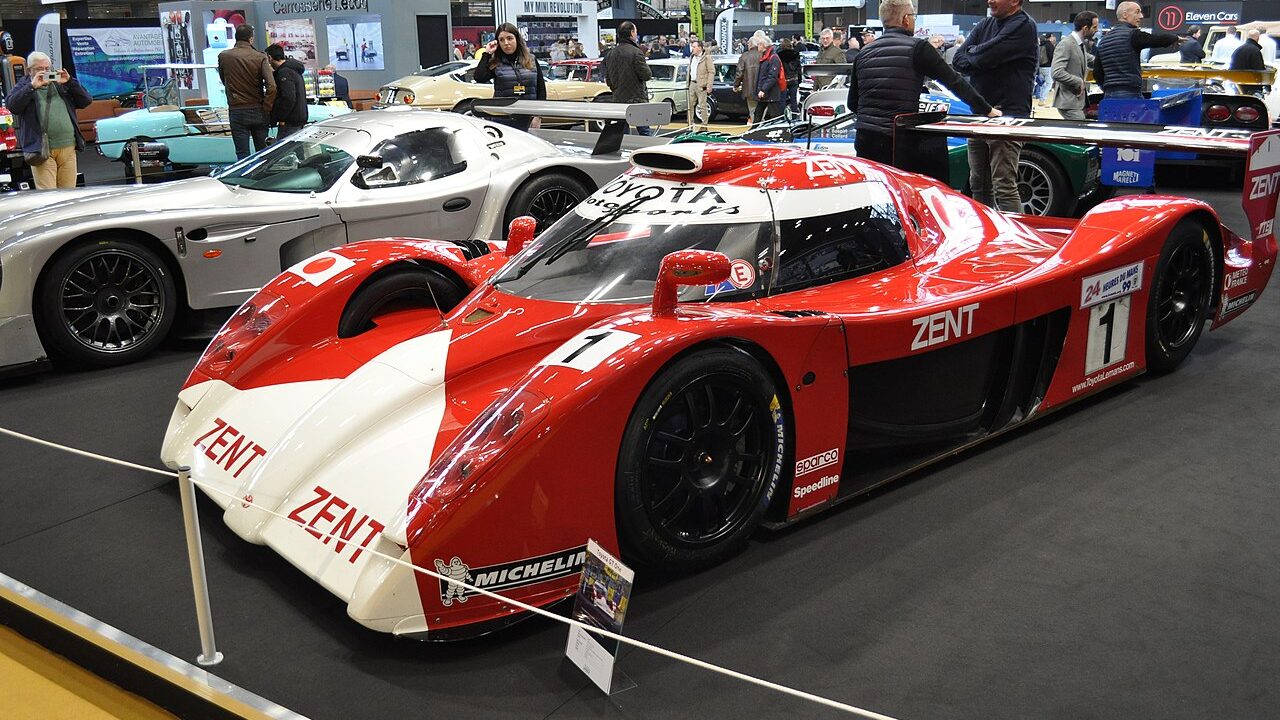
One of the most beautiful prototypes ever built, and one of the fastest, the TS020 GT-One exists in that magical window of late-’90s GT1 insanity when manufacturers were bending rules, pushing aero to the limit, yet still, somehow, building cars that looked like artwork.
Toyota very nearly won Le Mans with it in 1999, and even though it fell just short, the GT-One became immortal thanks to its appearance in video games such as Gran Turismo, making it the Japanese prototype race car everyone recognizes instantly.
Nissan R390 GT1 (Le Mans)
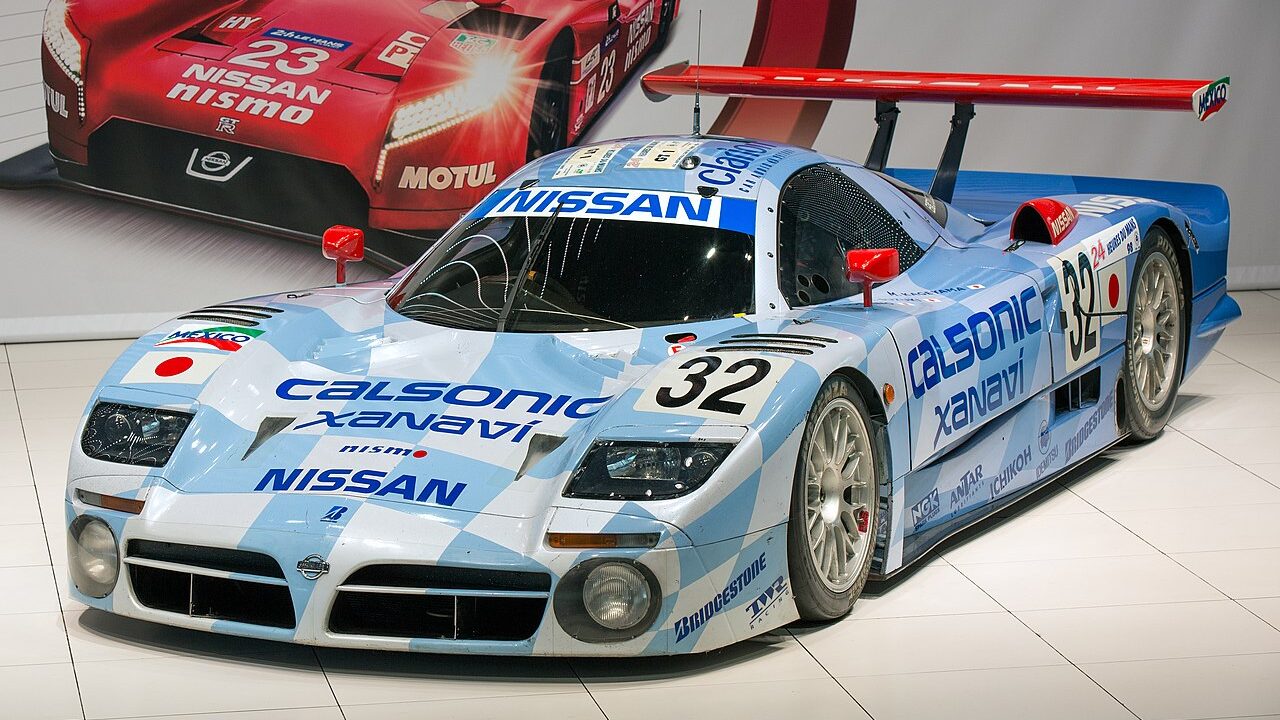
Overshadowed by the Toyota GT-One, but absolutely deserving of its own spotlight, the Nissan R390 GT1 was the Japanese carmaker’s answer to the Porsche 911 GT1 and Mercedes-Benz CLK-GTR. With its long-tail aero, deep sapphire blue body, and twin-turbo V8 power, the R390 is one of the coolest Le Mans cars ever to come out of Japan.
In 1998, all four R390s finished the 24 Hours of Le Mans, which is an unbelievable achievement in itself. The car never won, but it cemented itself as one of the most beloved GT1 machines thanks to its looks, sound, and presence in sim racing culture.
Mazda 787B (Le Mans Winner)
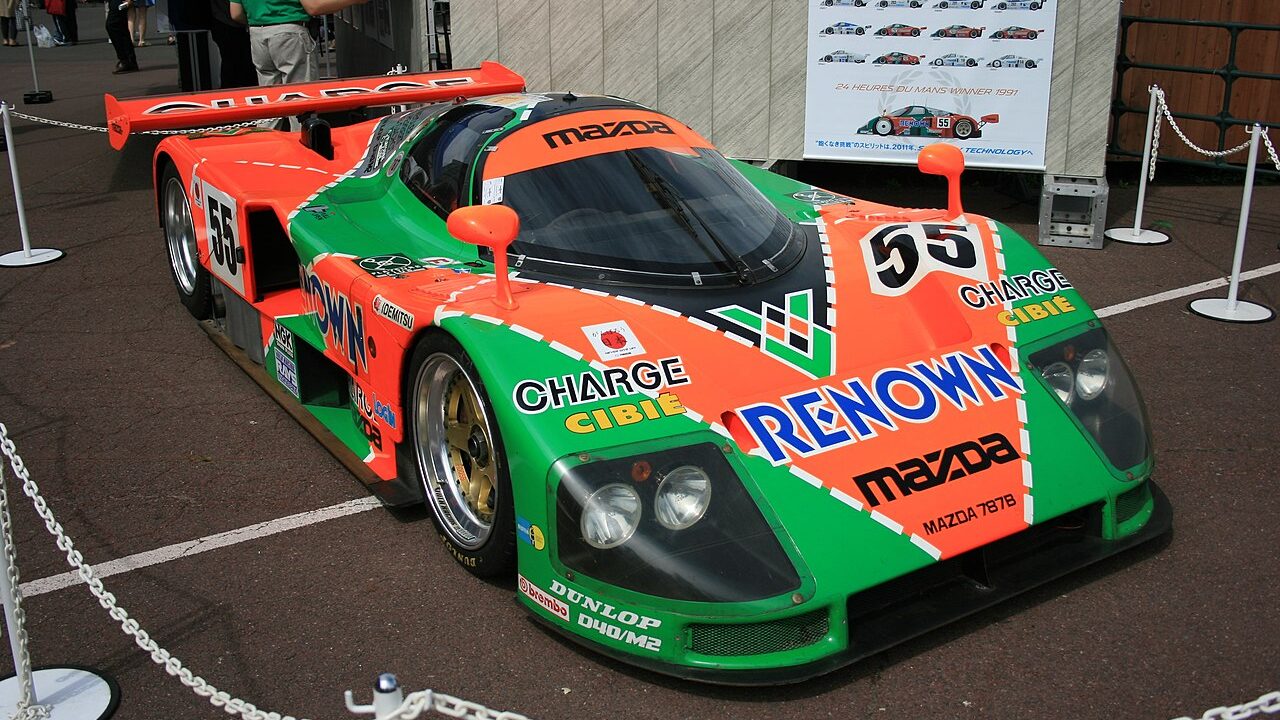
It’s impossible to talk about Japanese race cars without mentioning the Mazda 787B. This is the only rotary-powered car to win the 24 Hours of Le Mans, and one of the most iconic race cars in history.
The four-rotor R26B engine produced a scream that could wake the dead, and its orange-and-green Renown livery is instantly recognizable worldwide. Mazda’s 1991 victory was a cultural moment where a small manufacturer with a weird engine beat giants.
Calsonic Nissan Skyline GT-R R32 (Group A)
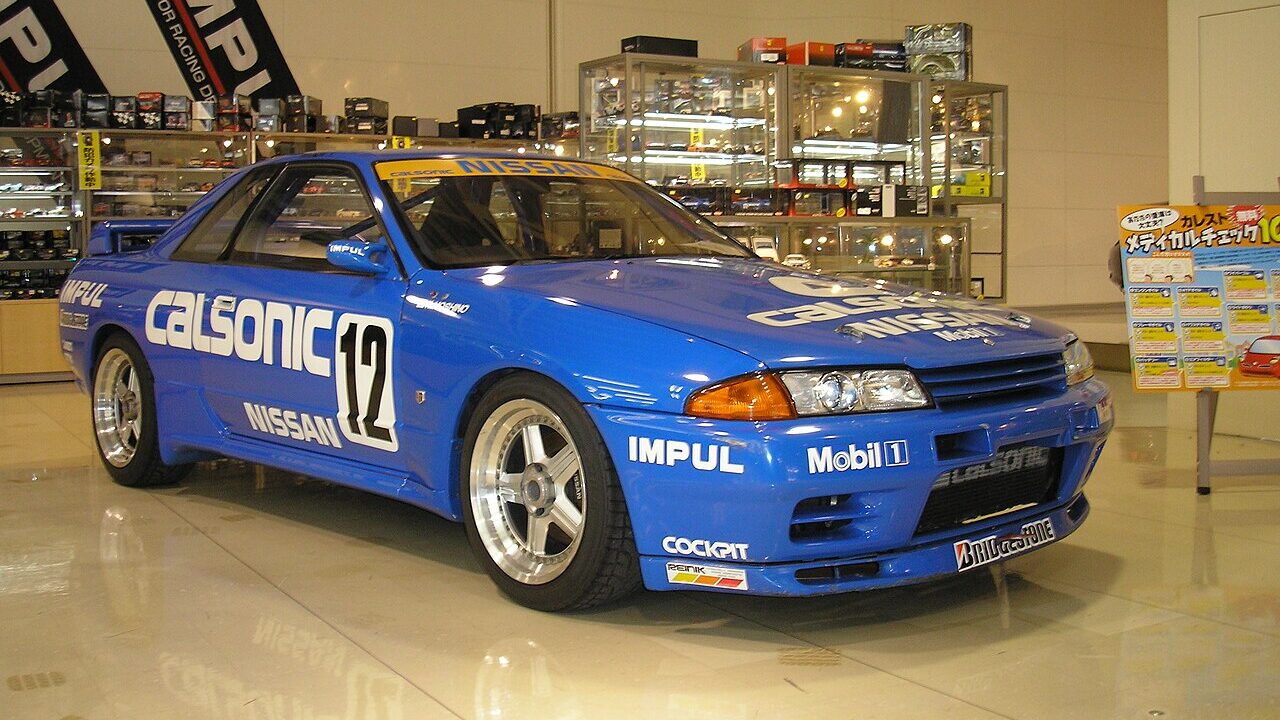
Godzilla! The Calsonic R32 Nissan Skyline GT-R was a great race car, in fact, it’s one of the most dominant touring cars ever built. It won all 29 races in Japan’s Group A series and earned the “Godzilla” nickname from Australian media for its unstoppable performance in the ATCC.
That Calsonic blue is sacred in JDM culture today. The R32’s combination of the RB26 engine, ATTESA AWD system, and bulletproof engineering made it a legend both on the track and in Nismo’s tuning world. It’s the most important JDM race car ever built.
Castrol TOM’S Toyota Supra (JGTC GT500)
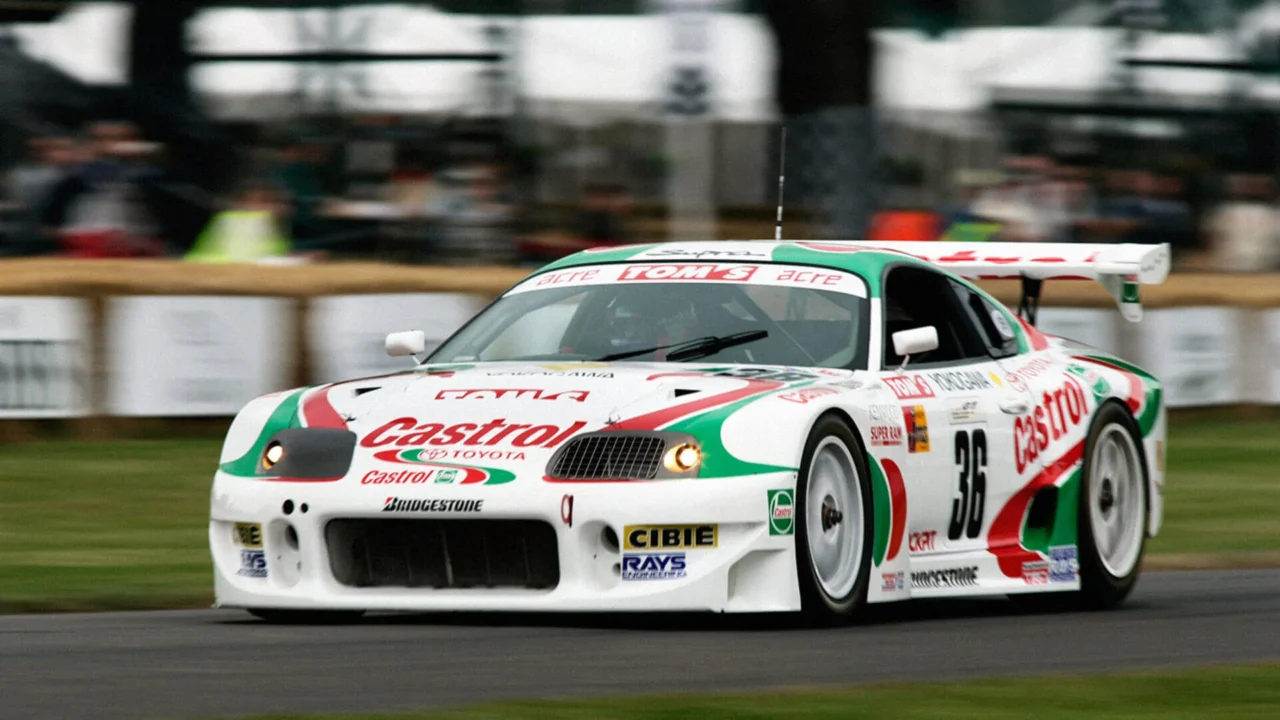
This is it — the king of JDM race cars. The Castrol TOM’S Supra is arguably the most iconic Japanese race car of all time. The livery is legendary, the stance is perfect, the aero is menacing, and in Gran Turismo, this was the JGTC car everyone remembers.
While the Supra GT500 was certainly visually stunning, it was also a championship winner. It represented the peak of Toyota’s GT500 engineering and the golden era of JGTC, before the series evolved into Super GT. Every detail, from the headlights to the wing, feels burned into the memories of motorsport fans worldwide. This car is forever #1 in JGTC and Japanese racing culture.
Japan has produced race cars unlike anything else in motorsport. Here we find machines with personality, engineering quirks, and unforgettable liveries, fueling stories that will last for generations. Whether it’s a rotary screaming down the Mulsanne Straight, a GT500 monster carving up Fuji Speedway, or a BTCC sedan racing door-to-door at Donington, Japanese racing culture is rich, diverse, and deeply loved.
Did you like this article?
Make sure you follow us on Facebook for more builds, guides, and car culture content.

