


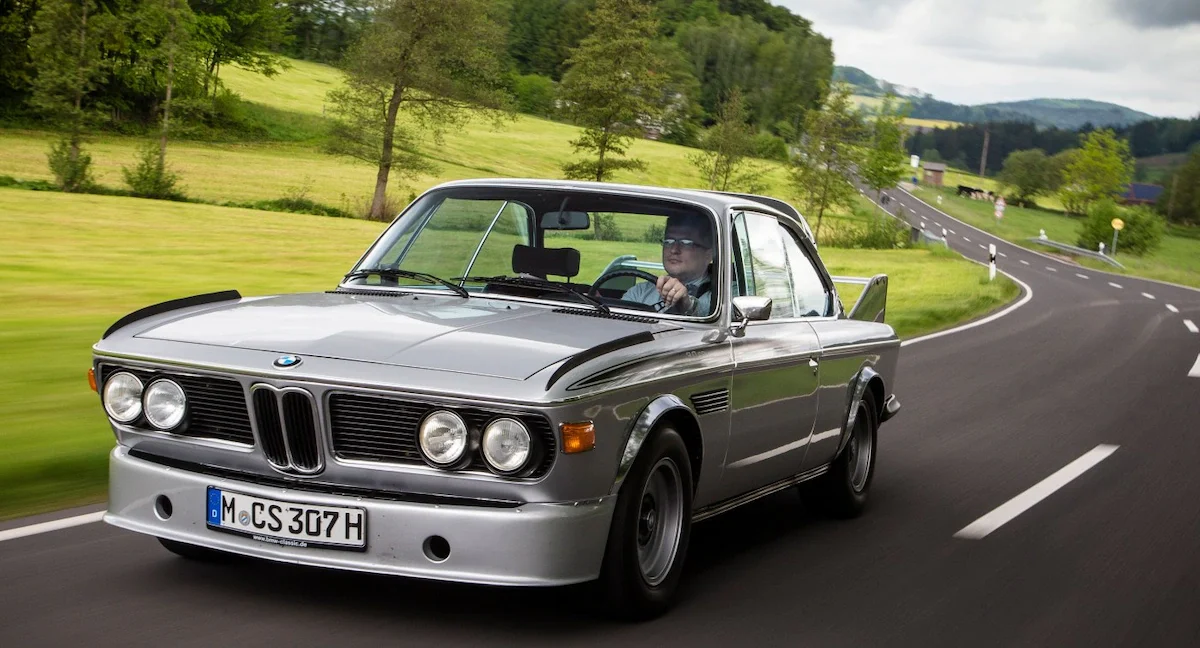
If you ask people what a BMW 3.0 CSL is, chances are you’ll get a hesitant answer: “Is it the one with the big wing? The Batmobile? Wasn’t it a race car?” Well — yes, and no. The E9 BMW 3.0 CSL is a road car, a homologation special, a raw track weapon, and the beginning of BMW’s Motorsport legacy.
It’s the car immortalized in those iconic Nürburgring photos from 1974, where Hans-Joachim Stuck launches over a crest with all four wheels in the air — flared arches, air dams, M stripes, and more attitude than you can shake a stick at.
To understand why the 3.0 CSL is so important, we need to rewind to the early 1970s, back to the E9 coupe, and a time when BMW was eager to prove itself in touring car racing.
The Background: E9, ETCC, and FIA Rules
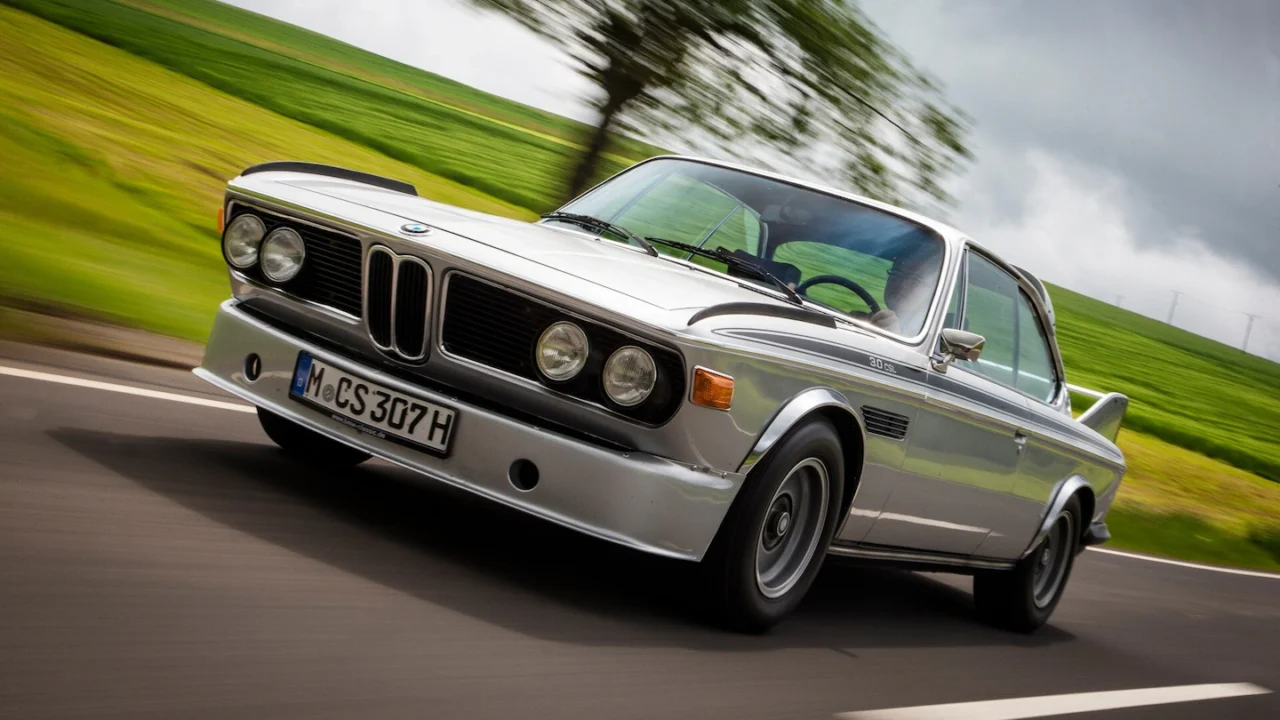
By the late 1960s, BMW was already producing the elegant E9 coupe — first as the 2800 CS, later as the 3.0 CS and 3.0 CSi. In true Grand Touring fashion, it was stylish, comfortable, and expensive. However, in order to compete — and win — in the European Touring Car Championship, Bavaria’s finest needed a lighter and sharper version of that car, one that complied with FIA’s homologation rules. That meant building and selling a minimum number of street-legal cars before being allowed to race a more extreme version on track. A classic 1970s “homologation special.”
BMW needed about a thousand cars to qualify. The starting point was the 3.0 CS, which they stripped, lightened, and transformed into the CSL, short for Coupé Sport Leichtbau (“lightweight”).
Here’s where people often get confused, as there were regular CSL road cars (most of them), a small number of “Batmobiles” with the full aero package, and the pure factory-built race cars — the ones you see wearing full BMW M racing livery. The last group is a completely different beast from any road-going CSL.
The “L” in CSL: Lightweight Engineering, with Alpina as Inspiration
The very first BMW 3.0 CSL was actually developed with help from Alpina, a tuning company known for producing BMW-based high-performance luxury cars. The goal was quintessentially German: take a standard 3.0 CS and remove everything that doesn’t make it faster.
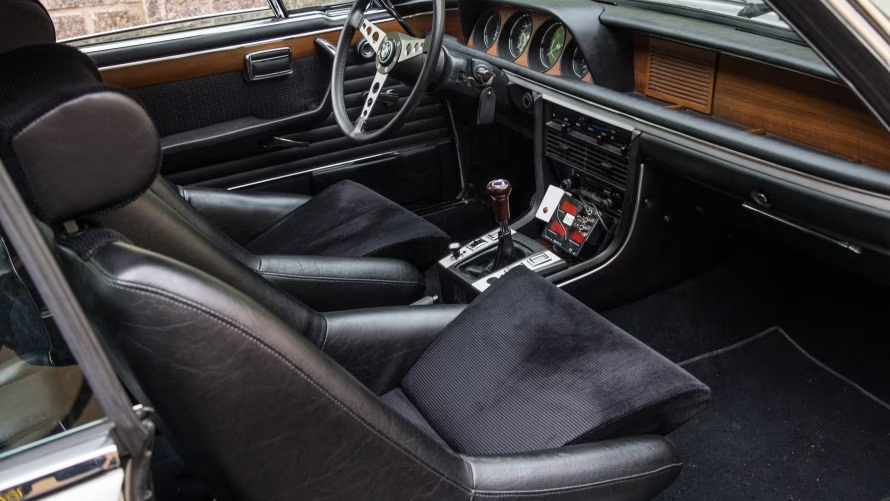
The first cars received aluminum panels (hood, trunk lid, and door skins), thinner steel in the body shell, a lightweight resin rear bumper instead of steel, thinner glass in the windshield, Lexan in the rear windows, lightweight Scheel seats, manual front windows, and fixed rears. Other deletions included the tool tray in the trunk lid, undercoating, sound insulation, power steering, and even the hood latch system.
All told, the most extreme cars shed about 200 kilograms. And yes — since Karmann built the E9 bodies, that also meant taking an already rust-prone car and making it even thinner. Gorgeous, without a doubt, but durability wasn’t its strong suit.
The first 169 cars (built in late 1971) were left-hand drive, powered by the 2,985cc M30 inline-six with twin carburetors (the same engine as the 3.0 CS), producing around 180 hp. These are often called “carb cars” or ultra-light CSLs, since they featured the most extensive weight reduction.
Series 2: Fuel Injection, a Bigger Engine – and the “City Package”
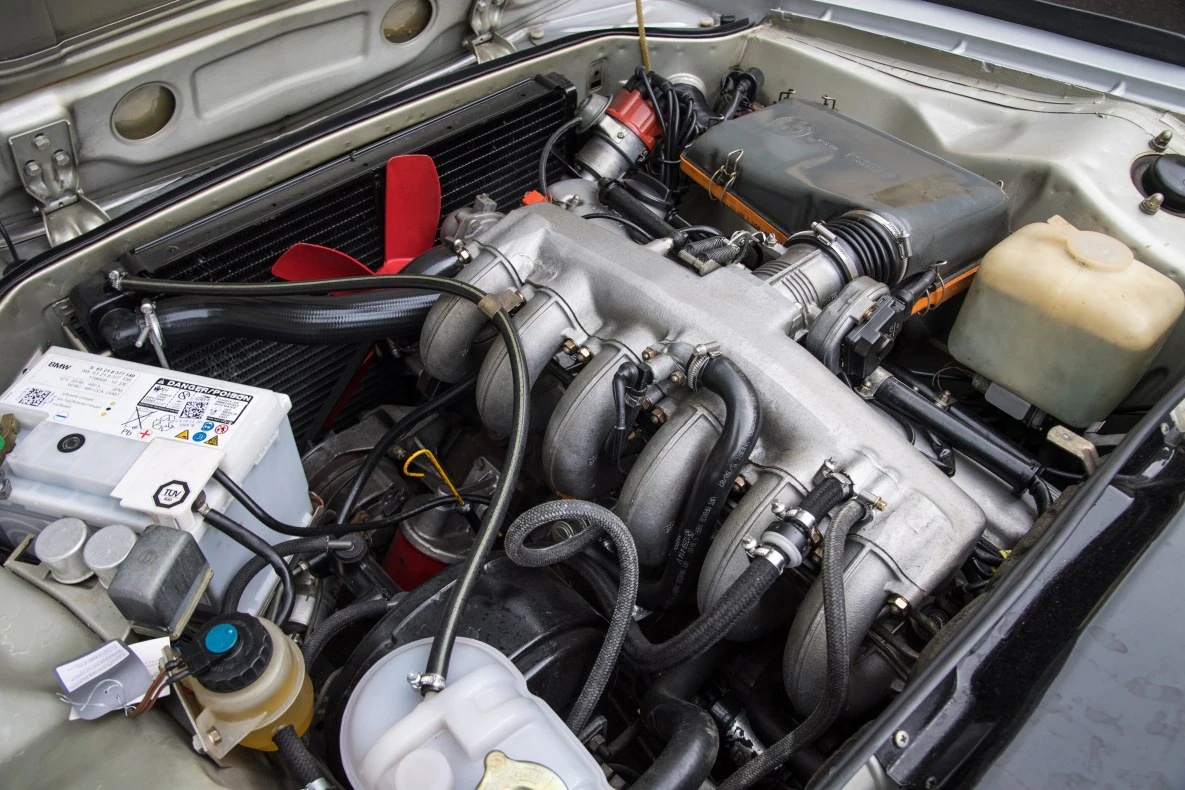
From September 1972, BMW began full-scale production of the 3.0 CSL; this was the batch that fulfilled homologation requirements and consisted of 429 left-hand-drive and 500 right-hand-drive cars. Engine displacement increased to 3,003cc so the car could compete in the over-3.0-liter class, and the carburetors were replaced by Bosch D-Jetronic electronic fuel injection, similar to the 3.0 CSi. Power increased to about 200 hp. Some sources call these models CSiL, but the badge still simply read “3.0 CSL.”
Then comes the nerdy BMW detail: most of the right-hand-drive cars imported to the UK came with the so-called Stadtpaket — the City Package in plain English. Many buyers wanted an exclusive BMW coupe but weren’t ready to give up comfort. So BMW reintroduced steel doors, a steel trunk lid, chrome bumpers, electric windows, thicker carpets, insulation, power steering, and more. The weight savings dropped from 200 kg to roughly 100 kg, but these cars were far more usable for daily driving compared to the more hardcore left-hand-drive versions.
Then Came the Legend: The BMW 3.0 CSL “Batmobile”
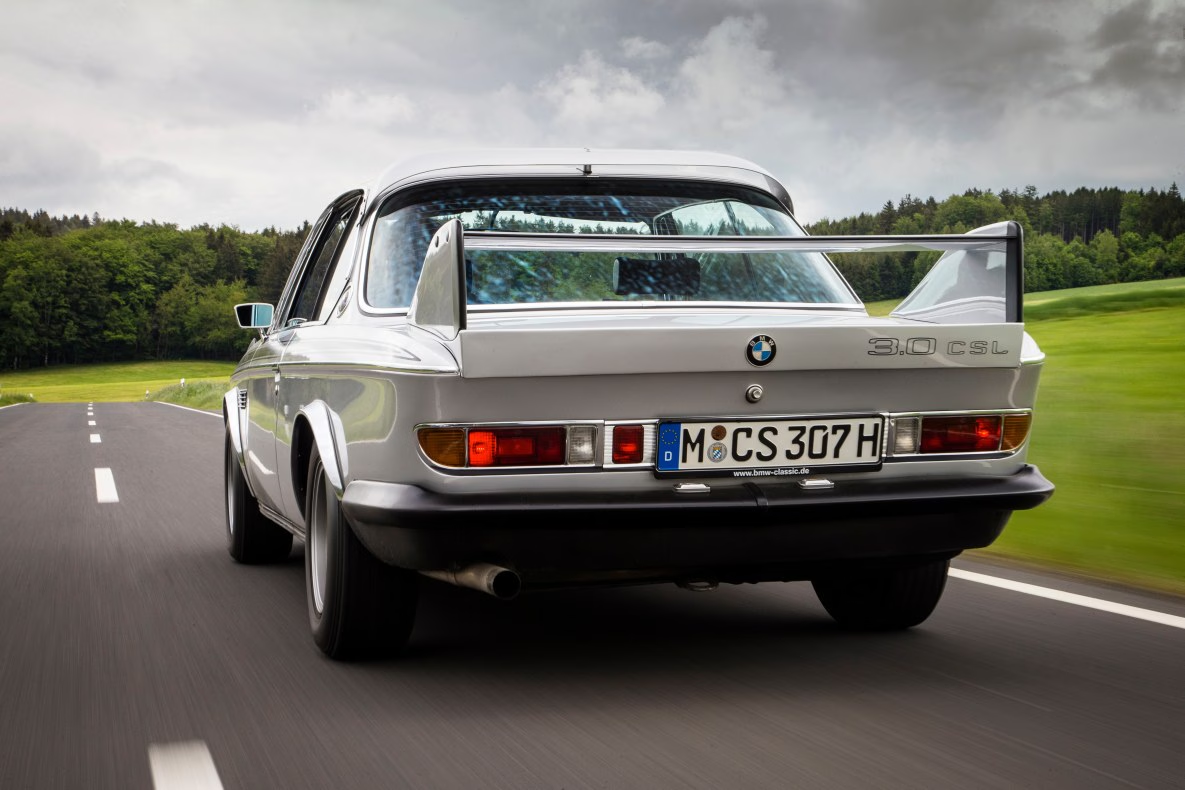
When people say “BMW 3.0 CSL,” they’re usually thinking of the one with the massive rear wing, roof spoiler, and little fins up front. However, not every CSL had that, as it was reserved for the final 167 cars. These are the ones affectionately known as Batmobiles, built in two small batches between 1973 and 1975, all left-hand drive.
The aero package existed for one reason: homologation. BMW needed better high-speed stability and more downforce for the race cars, and the road version had to feature the same parts. The “Batmobile” therefore received a huge rear wing (often shipped in the trunk because it was illegal on German roads), an additional hoop spoiler above the rear window, front air deflectors, and, in many cases, a steel trunk lid because the lightweight aluminum one couldn’t handle the downforce.
These cars also used the enlarged 3,153cc fuel-injected engine pumping out around 206 hp. Early cars came only in Polaris Silver or Chamonix White, but later ones could be ordered in other BMW colors — so if you see a Taiga Green or Golf Yellow CSL with full aero and left-hand drive, it’s likely one of the later Batmobiles.
Motorsport: The Car That Started BMW M

Even though it never wore an “M” badge, the 3.0 CSL was effectively the first M car. BMW Motorsport GmbH was founded in 1972, and the CSL was its weapon for the European Touring Car Championship. The result? Total dominance. The CSL won multiple ETCC titles throughout the 1970s, with the cars becoming more extreme as the years went on.
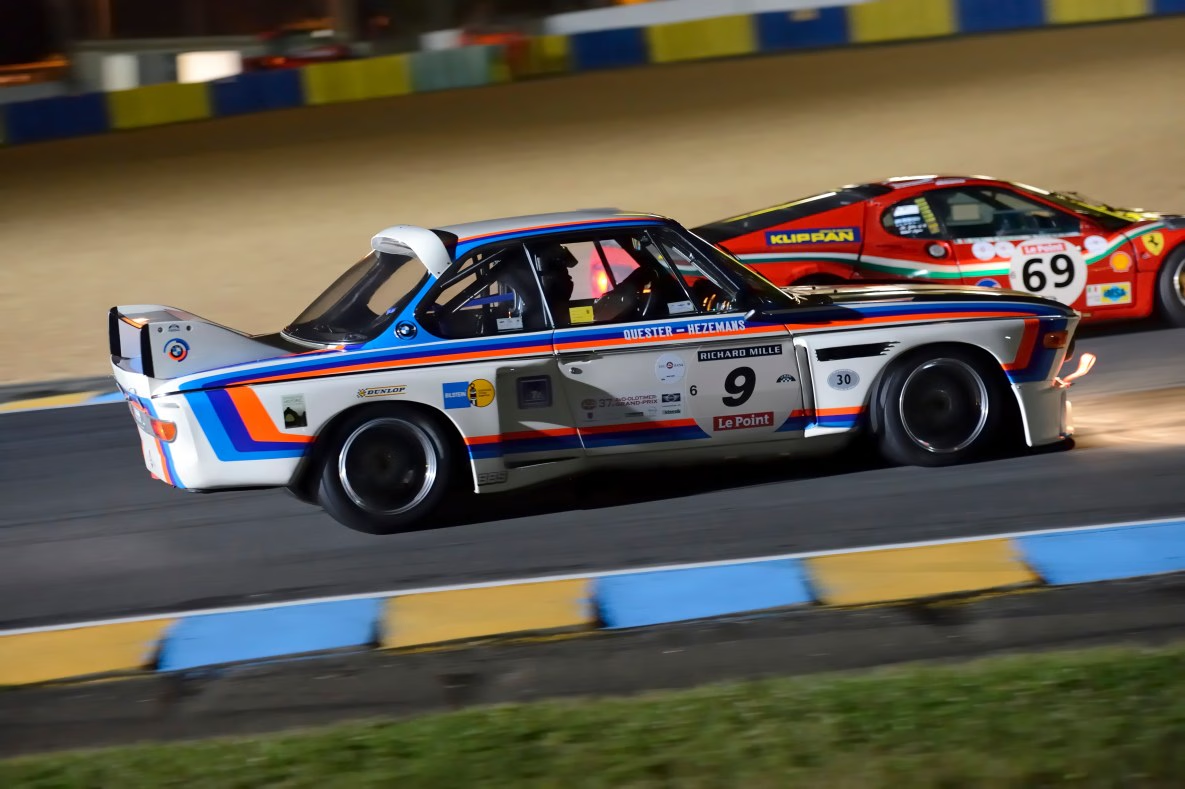
BMW only built roughly 20–21 genuine factory race CSLs. These were radically different from the road cars with stripped interiors, no wood trim, roll cages, fire systems, switches everywhere, wider fenders, deeper ducts, and more aggressive bodywork. The most extreme Group 4 and Group 5 versions used the wild 24-valve, 3.5-liter M49 racing engine with mechanical injection and over 400 hp, often seen spitting flames out of their side exhausts.
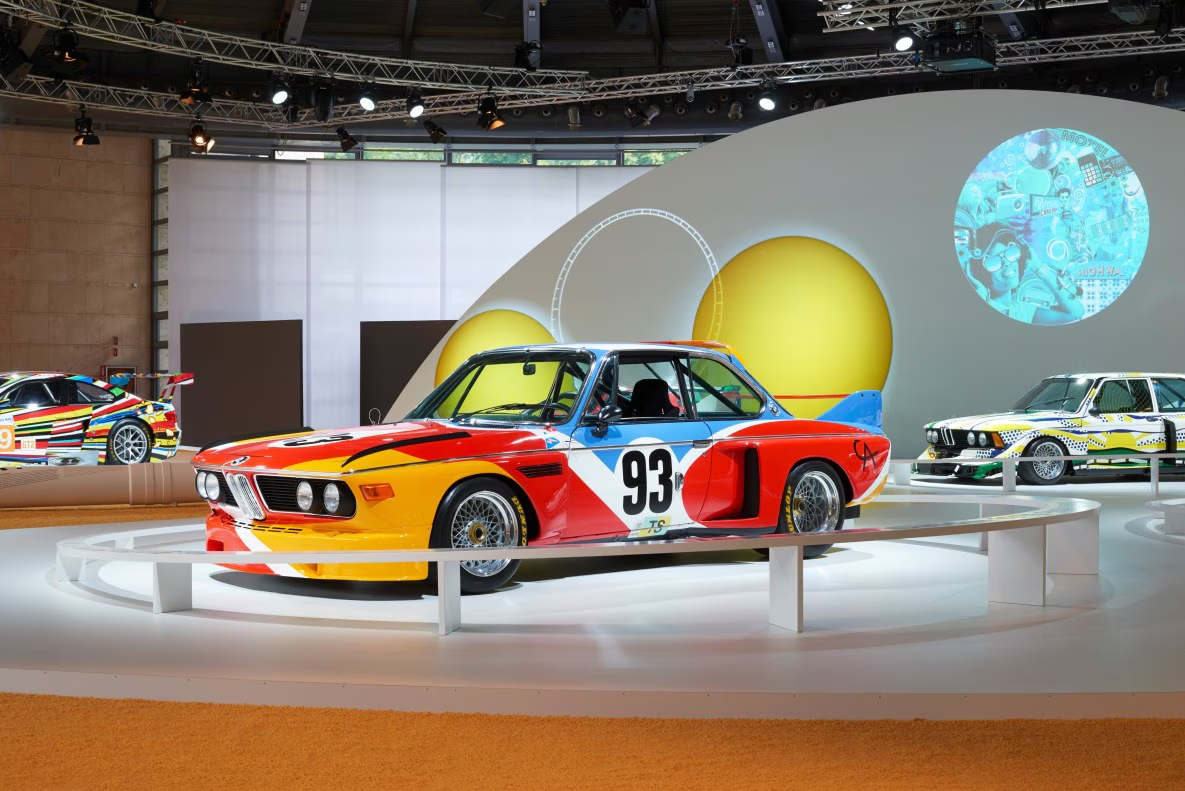
These are the cars — especially the white ones with the broad red, blue, and violet stripes — that people picture when they think of BMW’s golden era of touring car racing. The CSL was also the first car to wear the now-iconic M colors. Later came the famous art cars: Alexander Calder’s colorful Group 4 CSL, and Frank Stella’s graph-paper-themed Group 5 car.
If you see a “racing CSL” at a local show, it’s almost certainly a replica, as genuine factory race cars are extremely rare and ridiculously expensive.
How to Identify a True BMW 3.0 CSL

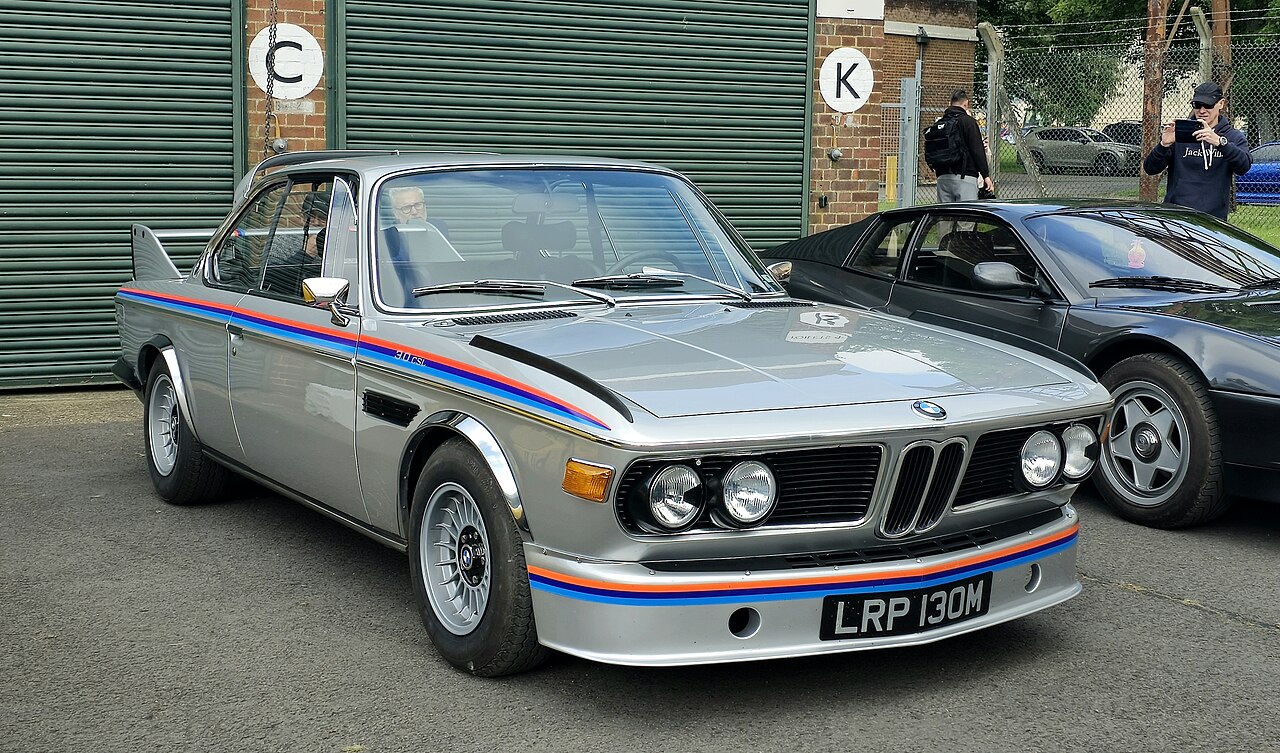
A pure, lightweight CSL without the City Package can be spotted by the absence of a front bumper (just a small black-painted nose lip), aluminum hood and trunk lid, plexiglass rear windows, Scheel bucket seats, black headliner, “3.0 CSL” stripes, and chrome arch lips over wide Alpina wheels.
City Package cars regained much of the standard trim, so you have to look for interior clues like the seats, steering wheel, and headliner.
And let’s be honest — since E9s are rust-prone, and CSL aero kits have long been available, many of the cars you see today are conversions or tribute builds. Nothing wrong with that, as long as owners are upfront about it. Authenticity is now the biggest driver of value in the CSL market.
Mechanically Speaking: Very BMW

Despite its legend status, owning a 3.0 CSL isn’t drastically different from owning a 3.0 CS or CSi. It still uses the M30 inline-six, the same E9 suspension geometry, just with stiffer Bilsteins, more camber, and less weight. You can drive them like any other classic BMW — but restoring a true CSL is expensive due to the unique parts and thin metalwork.
Why the BMW 3.0 CSL Matters
BMW’s E9 3.0 CSL marks the brand’s transformation from “maker of elegant grand tourers” to “dominant touring car racer.” The CSL proved the concept that still defines the M brand today: lightweight chassis, straight-six power, rear-wheel drive, and functional aero. You can trace that DNA straight through the M635CSi, M5, and especially the E30 M3 — which was basically the CSL concept reborn for the 1980s.
The 3.0 CSL also cemented BMW’s motorsport identity: a white car with tri-color M stripes and purposeful stance. There’s more to seeing a real “Batmobile” in person than just looking at a rare E9, as you’re basically witnessing the birth of BMW Motorsport itself.
E9 BMW 3.0 CSL Market and Collector Status
Production numbers were small, no matter how you slice them:
-
169 early left-hand-drive carbureted CSLs,
-
929 fuel-injected cars (429 LHD and 500 RHD, most of the RHD with City Package),
-
167 Batmobiles in two batches.
That’s it. And since these were hand-assembled low-volume cars, details vary from one to the next. That’s why Bring a Trailer comment sections are filled with people debating whether a particular car “should” have a third stabilizing fin on the wing or not.
What’s certain is that all genuine CSLs are valuable, and the factory race cars are in a completely different universe when it comes to price.
Summary
- BMW 3.0 CSL is the lightweight evolution of BMW’s E9 coupe, built from 1971 to 1975 to homologate the car for racing.
- Most CSLs look similar to the standard 3.0 CS, just lighter and with subtle flares.
- City Package cars regained comfort and weight.
- Only the final 167 cars received the full aero kit — the “Batmobiles.”
- Factory race CSLs were far more extreme.
- All are part of the 3.0 CSL story, though not all are equally rare or valuable.
- And finally: without the 3.0 CSL, we likely wouldn’t have BMW M as we know it today, and that fact alone makes it worth celebrating.
Did you like this article?
Make sure you follow us on Facebook for more builds, guides, and car culture content.

